
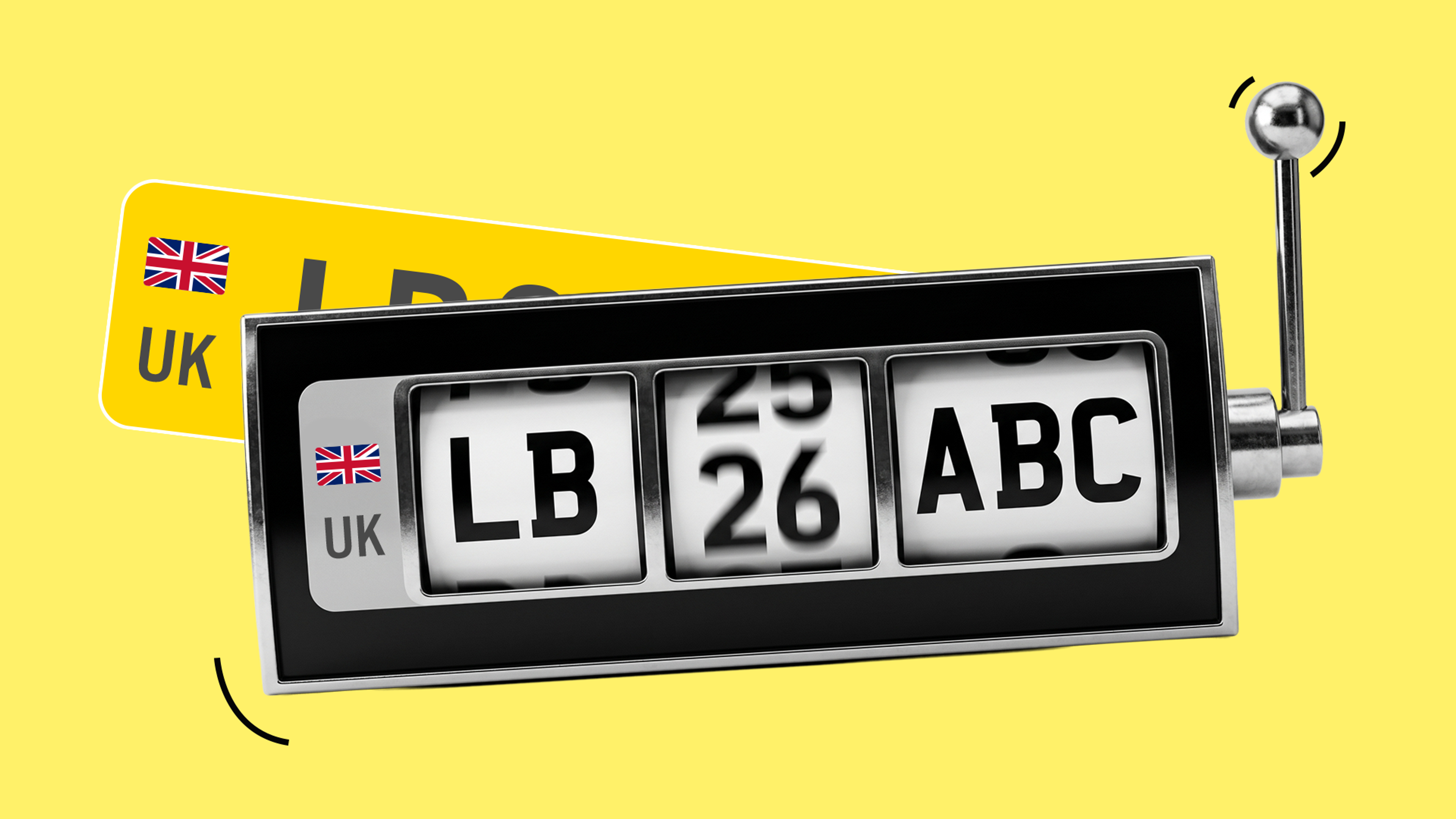
Car buyers in the UK often wonder when new number plates come out before signing the papers. New UK car registration plates are issued twice a year on 1 March and 1 September, making these dates especially important for those aiming for more recent aesthetics.
However, following when new reg plates come out won’t do the trick without knowing the most important ins and outs: when to plan registration, what exceptions are there, and whether it's even worth the wait.
Used cars have dark secrets
Reveal them all! Just click the button below and enter the VIN or registration number to check it in under a minute.
Why do UK number plates change twice a year?
Cars used to get new plates once a year. From 1967, this would happen on 1 August, and it meant dealers had to deal with a massive rush of buyers at a single point every year. In August 1998, for example, Britons bought roughly a quarter of that entire year's new cars. The system made planning difficult for manufacturers, with negative effects on pricing.
In 1999, the DVLA split the release into two. The T prefix arrived in March, the V prefix in September, and this twice yearly pattern has run ever since. Contemporary Fleet News reporting confirmed the split worked, with 1999's twin peaks both shallower than the older, annual August spike.
The current plate format started on 1 September 2001. It uses two letters for the region, two digits for the age identifier, and three random letters. As for when reg plates change, this remains twice a year, on fixed calendar dates that do not shift for weekends or bank holidays.
Here's how the identifier has read recently, and where it's heading through the end of the decade:
Identifier | Released | Covers |
20 | 1 Mar 2020 | Mar 2020 to Aug 2020 |
70 | 1 Sep 2020 | Sep 2020 to Feb 2021 |
21 | 1 Mar 2021 | Mar 2021 to Aug 2021 |
71 | 1 Sep 2021 | Sep 2021 to Feb 2022 |
22 | 1 Mar 2022 | Mar 2022 to Aug 2022 |
72 | 1 Sep 2022 | Sep 2022 to Feb 2023 |
23 | 1 Mar 2023 | Mar 2023 to Aug 2023 |
73 | 1 Sep 2023 | Sep 2023 to Feb 2024 |
24 | 1 Mar 2024 | Mar 2024 to Aug 2024 |
74 | 1 Sep 2024 | Sep 2024 to Feb 2025 |
25 | 1 Mar 2025 | Mar 2025 to Aug 2025 |
75 | 1 Sep 2025 | Sep 2025 to Feb 2026 |
26 | 1 Mar 2026 | Mar 2026 to Aug 2026 |
76 | 1 Sep 2026 | Sep 2026 to Feb 2027 |
27 | 1 Mar 2027 | Mar 2027 to Aug 2027 |
77 | 1 Sep 2027 | Sep 2027 to Feb 2028 |
28 | 1 Mar 2028 | Mar 2028 to Aug 2028 |
78 | 1 Sep 2028 | Sep 2028 to Feb 2029 |
29 | 1 Mar 2029 | Mar 2029 to Aug 2029 |
79 | 1 Sep 2029 | Sep 2029 to Feb 2030 |
30 | 1 Mar 2030 | Mar 2030 to Aug 2030 |
This age identifier actually began in 1963, designed to help buyers spot a car's age at a glance and to head off a shortage of available number combinations. That original suffix system ran until 1983, when it was replaced by the prefix system, which in turn gave way to today's plate format in September 2001.
How do number plates affect a used car's value?
A 76 plate car and a 26 plate car are both 2026 registrations, six months apart. However, most serious buyers and dealers judge the value of cars on their original registration date, mileage, condition, and service history, not on the freshness of the plate itself.
Important note
Two cars with matching mileage and condition can still list at slightly different prices because one has the newer plate, and casual buyers will react to it. The effect is real, but usually smaller than most sellers think, and always smaller than the age of the car itself.
In any case, new cars typically lose 15 to 35% of their value in the first year, and around 40 to 60% by year three. That drop is deeper than any premium a plate identifier can add. If you're shopping used, your strongest gains come from picking the right car rather than chasing the newer plate.
Private plates deserve a mention too. A cherished registration can hide a car's age from a quick glance on the drive, but the true first registration date stays on the V5C and appears on any DVLA check. While a personalised plate changes what the car looks like, it doesn’t change what the market thinks it's worth.
You can reveal a car's history using its plate number
When it comes to used cars, buyers should be focused more on the car's past than the age identifier on the number plate. Your registration number can unlock more than you might think. Checking a car’s history using a licence plate can reveal years of hidden detail in seconds.
HPI says roughly 1 in 3 cars it checks is still on outstanding finance, and a private buyer who misses that can lose the car to the finance company under certain conditions. carVertical GB data puts the UK clocking rate at 2.1%, and some cars carry rollbacks of tens of thousands of miles. Write off records follow cars around: a Cat S or Cat N vehicle has been through structural or non structural repair work, with a negative effect on market value.
There could be other financial consequences. A stolen car can be seized with no compensation to you, and a clocked car may drive fine now, but cost thousands at the next service. Even a well maintained looking Volkswagen Tiguan with bad history can pass a casual inspection while hiding accident damage, fraudulent paperwork, or a mileage story that does not add up. Even without knowing how to spot a mileage rollback, a proper history report can catch it automatically, showing you exactly how a car has been handled.
Pulling a carVertical report from a registration plate takes about a minute:
1.Enter the GB registration number on carvertical.com/gb.
2.Choose a single report or a bundle.
3.Complete payment.
4.View the report in your browser, or download it as a PDF.
Or simply use the banner below.
Leave no car unchecked
Compare two cars and save 32%, three and save 45%. No code needed.
When does the 76 plate come out?
The 76 plate comes out on 1 September 2026. It applies to any car first registered between 1 September 2026 and 28 February 2027. The number is not random – for September releases, the DVLA adds 50 to the last two digits of the year, so 2026 + 50 = 76.
Here's what follows over the next two years:
Identifier | Released | Covers |
76 | 1 September 2026 | Sep 2026 to Feb 2027 |
27 | 1 March 2027 | Mar 2027 to Aug 2027 |
77 | 1 September 2027 | Sep 2027 to Feb 2028 |
28 | 1 March 2028 | Mar 2028 to Aug 2028 |
If you want a 76 plate on your driveway on delivery day, order early. Realistic lead times in 2026 vary sharply by brand: Toyota is running around 8 to 10 weeks, Ford and Audi are closer to 6 months, and some Volkswagen and BMW models stretch to 9 months or more. Cars that are in stock can be turned around in 2 to 4 weeks, but popular specs disappear fast in the run up to a plate change.
If you don’t care much when the 76 plate comes out, the outgoing 26 plate is where the deals live. Dealers face quarter-end targets in September, and outgoing plate cars often carry sharper discounts in the last two weeks of August. This has a knock-on effect of making it one of the best times to buy a used car, too, proving that timing can often be a bigger factor than most buyers realise.
How to read a UK number plate
A modern GB plate has three parts. Take AB26 CDE as an example:
- AB is the local memory tag. The first letter shows the region, and the second narrows it to a DVLA office.
- 26 is the age identifier, meaning a March 2026 registration. A September 2026 car would read 76.
- CDE is a random three letter sequence, unique to that car. Neither I nor Q ever appears in this block.
Several other plate types show up. Green flash plates have been available for battery electric vehicles since 8 December 2020, but they're voluntary. Hybrid and PHEV cars are not eligible, and any parking or clean air zone benefit is up to local authority, not automatic. Black and silver historic plates are allowed on cars made before 1 January 1980, as long as the vehicle is in the historic tax class. Q plates are for when DVLA can't establish a car's age or identity, often for kit cars or certain imports.
What age car can my number plate go on?
Whether you're moving a plate you've owned for years onto a new car, or double checking one on a used car you're about to buy, there's a strict rule about what age car your number plate can go on.
The DVLA will not assign a registration that makes a car appear newer than its first registration date, and refuse any transfer that would do so. That covers cherished plates, dealership assignments, and private sales too. The rule sits in the DVLA's INF104 guidance and applies to every vehicle class in Great Britain.
Having said that, going in the other direction is fine. An older or dateless registration can go on a newer car with no problem, which is why you'll sometimes see a 1960s dateless plate on a modern SUV. Buyers do this for style, a personal connection to the numbers or letters, or simply because a short old registration looks cleaner than a modern one.
Deliberately misrepresenting a car's age through its plate is a separate matter, and it does carry criminal risk. Under section 43 of the Vehicle Excise and Registration Act 1994, misrepresenting or obscuring a registration mark can bring a fine of up to £1,000, an MOT failure, and permanent withdrawal of the registration. That penalty covers both deliberate misuse and incorrectly displayed plates, though the two are treated with very different seriousness.
Exception
Northern Ireland works differently, using a format without any age identifier, so this rule doesn't map to NI registered vehicles strictly.
How to fit number plates
How to fit number plates properly often comes down to picking the right supplier and following a few careful steps. Plates fitted since 1 September 2021 must meet British Standard BS AU 145e, which sets the reflectivity, resilience, and character requirements the DVLA and MOT tester will check for.
The character sizes are fixed by law. The font must be Charles Wright, in solid black on a white front or yellow rear. 3D and 4D raised characters are allowed if they're solid black and BS AU 145e compliant but carbon, tinted, two-tone, and shadow finishes are not.
Fitting the plate itself is fairly straightforward:
1.Buy your plates from a Registered Number Plate Supplier (RNPS), showing photo ID and proof of entitlement (your V5C, the green new keeper slip, or a V750 / V778 for a cherished registration).
2.Clean and degrease both the mounting surface and the back of the plate. Adhesive pads need a dry surface, above roughly 10 degrees C.
3.Line the plate up first without pressing anything down. Most bumpers have a recessed area or existing screw points to guide you.
4.Fix with either adhesive pads across the four corners and centre, or with screws through the pre drilled holes. Coloured screw caps must not overlap or alter any character.
5.Check the BS AU 145e mark, supplier name, and postcode are visible below the registration.
Adhesive pads are the no drill choice most drivers reach for first, and on a smooth bumper they hold reliably for years. On textured plastic, heavily curved surfaces, or in a cold wet climate, they can peel over time, and screws are the more reliable option. Whichever method you pick, the plate has to stay clean and readable at all times: an unreadable plate is an MOT failure and can attract a fine of up to £1,000.
Frequently asked questions

Article by
Evaldas Zabitis
Evaldas is an automotive expert and writer at carVertical, focusing on technical automotive topics. With studies in motor transport electronics and over a decade of experience in car flipping and automotive writing, he helps readers better understand vehicle history, inspections, maintenance, and common used car buying risks.