
What is a VIN (vehicle identification number)? Meaning, structure, and importance
Got the VIN figured out? Now check what it reveals.
What is a VIN number?
Meaning of the VIN: what does the vehicle identification number reveal?
A VIN gives access to certain details about the car, with some information actually recorded by the characters themselves. Everything else, including MOT history, mileage history, write-offs and outstanding finance, is in databases connected to the VIN number and has to be looked up. Here are a few details the VIN can tell you:
Production details
The manufacturer, the assembly plant and the model year. Watch that last one: it is the year the manufacturer declared, not necessarily the year the car was built, so a small mismatch with the V5C is not necessarily suspicious.Technical specifications
Engine, gearbox, body style and factory equipment. European VINs encode less of this than American ones, so a good VIN decoder checks manufacturer build data directly rather than just reading the characters.Vehicle history
None of a car's history is stored in the VIN number itself. It is retrieved by matching the number against records held by different organisations, and they do not all open their doors to the public. DVSA MOT history is free on GOV.UK, but write-off, accident history, and theft registers are not public.I've seen buyers spend hours inspecting a car but never check the VIN. It's often the easiest way to confirm the car's identity, verify that its specifications match what's being advertised, and uncover details about its history that aren't always obvious during a viewing or test drive.
High Peak Autos
497k subscribers

What does a VIN number look like?
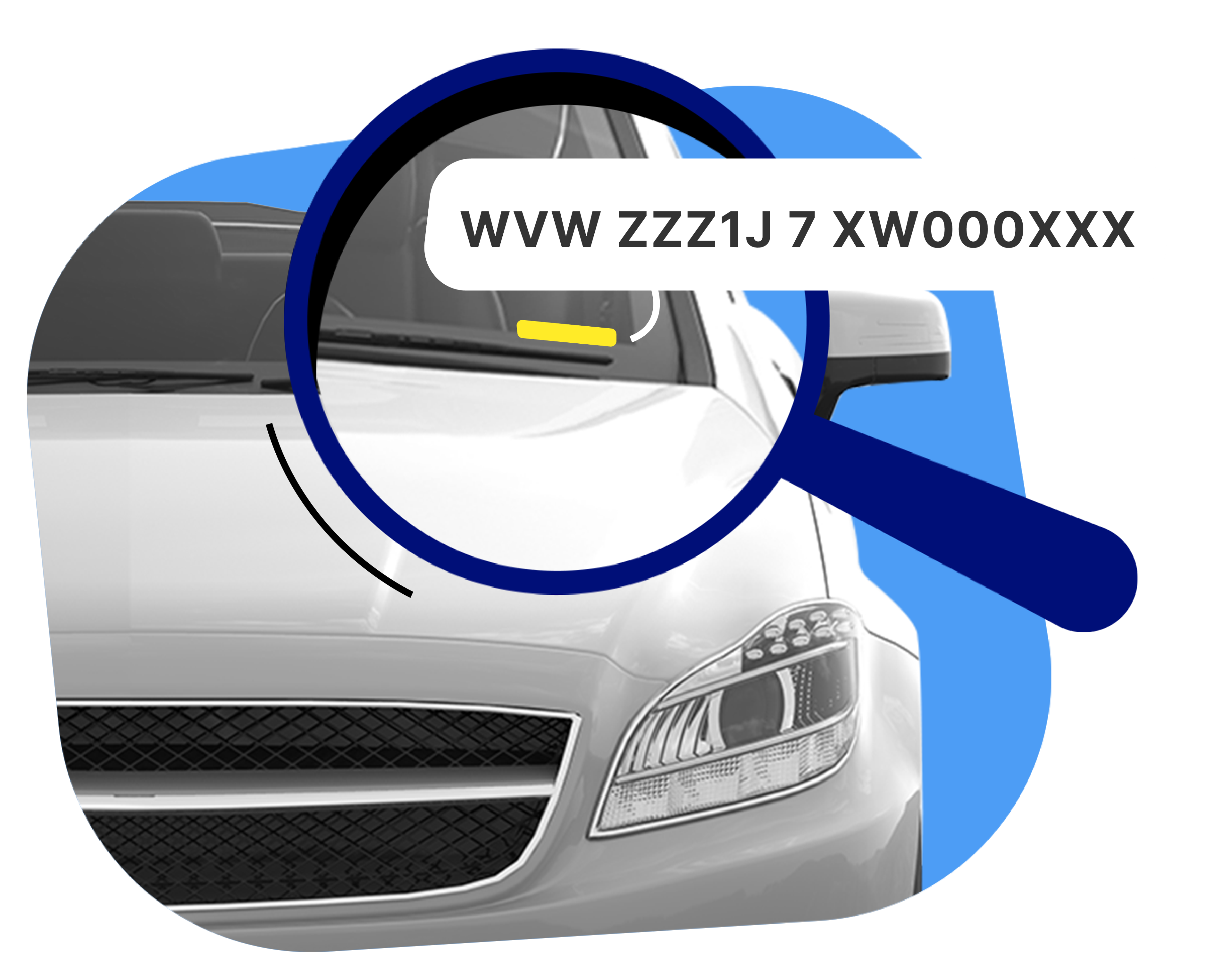
 The letters I, O and Q never appear, because they are too easily confused with the digits 1 and 0. So anything that looks like an I or an O is actually a 1 or a 0. Once you know the pattern, spotting a VIN number on car bodywork, plates and paperwork becomes easy.Each character in the VIN tells you some information about the car, and the combination they’re arranged in reveals specifics regarding who produced the car, where it was made, and more.
In Great Britain, the modern VIN format arrived through international standards, EU type-approval law was kept within GB law after Brexit, and the Construction and Use Regulations, which require a VIN on vehicles first used on or after 1 April 1980.
Decoding the VIN: Structure of the vehicle identification number
Every character in a vehicle identification number does a job, and the number splits into four sections:- World Manufacturer Identifier (characters 1 to 3)
- Vehicle Descriptor Section (4 to 8)
- Security Check Digit (9)
- Vehicle Identifier Section (10 to 17)
World Manufacturer Identifier, WMI
The first three characters are not chosen by the manufacturer. They are pre-assigned by a national body, which in the UK is the British Standards Institution (BSI). The first character sets the region, the first two narrow it to a country, and the third identifies the manufacturer or vehicle type. UK-built vehicles are in the S range.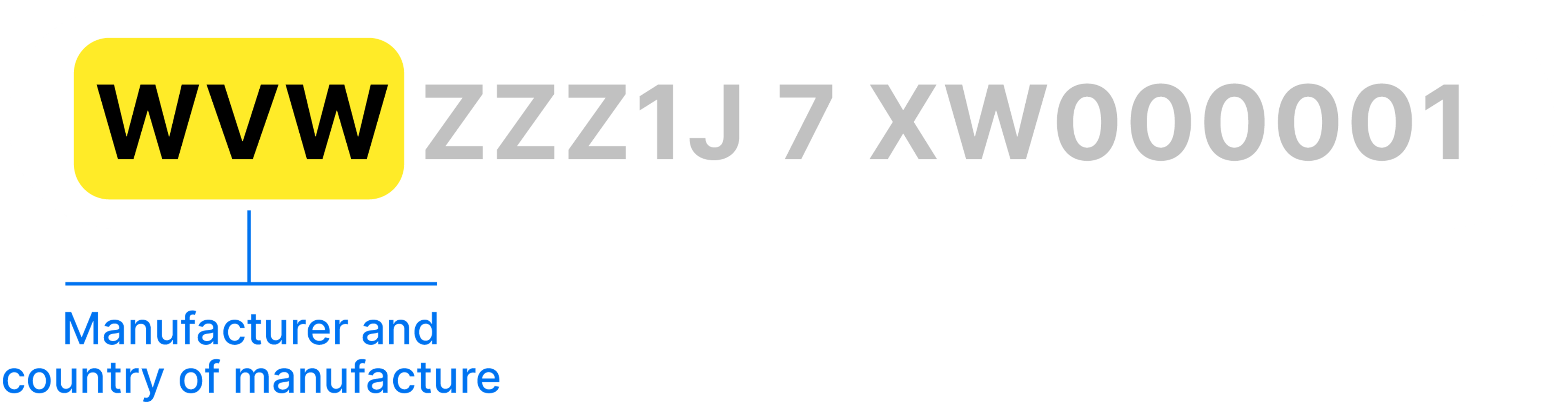
Vehicle Descriptor Section, VDS
Characters 4 to 8 are the manufacturer's own description of the vehicle, covering things like model line, body style, engine and restraint system. In Europe the content is set by the manufacturer, who may also pad unused positions with filler, such as ZZZ. Two cars can therefore have identically structured VINs carrying very different amounts of information, which is why a decoder built on manufacturer build data beats one that only reads characters.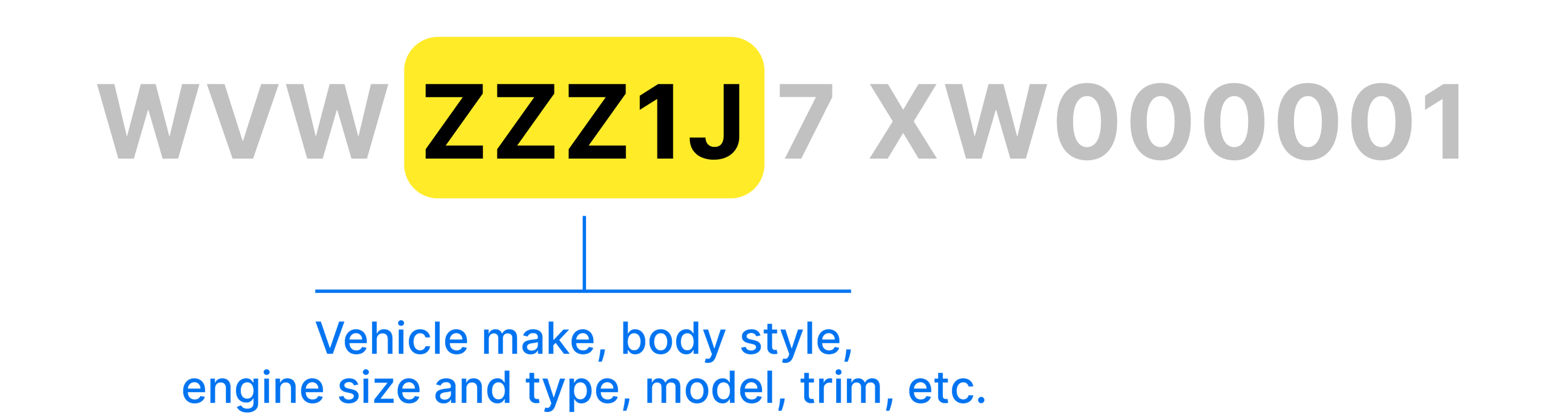
Security Check Digit
Character 9 is the check digit. It does not describe the car: it is calculated from the other 16 characters, so a computer can spot a mistyped or invented VIN. Plenty of European vehicles carry a character in position 9 that has nothing to do with the formula, so if a US-built validator tells you your Golf's VIN is invalid, the tool is wrong, not the car.
Vehicle Identifier Section, VIS
Characters 10 to 17 identify the individual vehicle. Position 10 is the model year, position 11 the assembly plant, and 12 to 17 the serial number. The codes run on a 30-year cycle, so each letter also stands for a year 30 earlier: X is 2029 or 1999. Assembly plant codes are manufacturer-specific, so decoding position 11 means having the right maker's table to hand.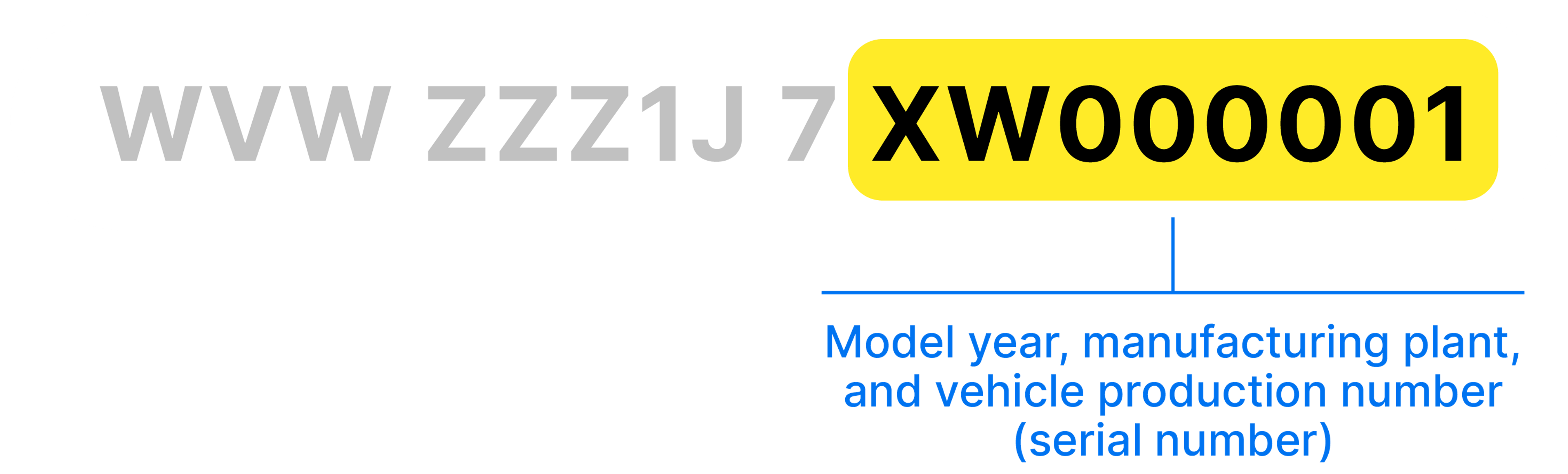
Why decode a VIN by hand?
Enter it here, get a report, and access vehicle information in less than a minute.
Trusted by 6,000,000+ people across 37 countries




Where can I find the VIN number on my car?
 You will find it stamped on the car and printed in its documents. Exact locations vary by model, but expect it:
- At the bottom of the windscreen: on the driver's side of the dashboard, visible through the glass from outside. The most common spot.
- Under the bonnet: usually on a plate near the latch or on the bulkhead.
- On the driver's side door pillar: on the inner face, visible when the door is open.
- At the front of the frame: reachable through the wheel arch, more common on older cars.
- Under the boot floor: lift the lining near the spare wheel.
What can you do with the VIN number?
- Verify vehicle data: confirm a vehicle's identity, specifications and factory equipment.
- Complete official procedures: submit documents for insurance, registration or financing.
- Find the right parts: identify compatible spare parts for the exact specification.
- Check the vehicle's history with carVertical: uncover recorded damage, mileage fraud, ownership changes and other records.
Common problems with the VIN
A VIN only works as proof of identity if you can read it and it matches in each place you find it. Two very different things can get in the way – honest wear and deliberate interference.
Damaged or repainted VIN
Rust is a common issue because stamped VINs sit on floorpans, inner wings and bulkheads, where salted roads do their worst. Accident repairs can also remove or relocate a stamped VIN legitimately when a panel is replaced, and repainting can bury a number without anyone intending to hide it.
Illegible or hidden VIN
Underseal, wax, sound deadening, thick dirt, and aftermarket trim can all block VINs, as can dealer stickers and sunshades parked over the dashboard plate. None of that is sinister on its own. What matters is the seller's reaction, so if someone will not let you wipe a plate clean or lift a boot lining, be wary.
Signs of VIN tampering
Tampering turns a paperwork problem into a criminal one, and it usually leaves traces. Look for stamping that changes in depth, font, or spacing partway through the number, characters that appear re-struck, doubled, or crowded, and signs of grinding, filing, or fresh paint around the number. Also check for disturbed plate edges or fixings, a replaced adhesive label, or a windscreen plate that doesn’t match the stamped number or the V5C.What can you learn from a VIN number check about a car’s history?
- Accident and damage history: recorded damage, repair cost estimates where available, and write-offs.
- Mileage history: recorded odometer readings that expose a rollback.
- Theft records: whether the vehicle has been reported stolen.
- Ownership and registration history: previous keepers, registration events, imports and exports.
- Financial and legal status: outstanding finance and other flags, where the data exists.
- Historical photos: images that help verify past condition, or even possible write-offs when available.
- Vehicle specifications: factory equipment, engine, transmission and technical details.
- Market price: how the asking price compares with similar cars.
- MOT and service history: past results, advisories and failures.
A few minutes now can save you thousands later
Hidden damage, a rolled-back odometer or outstanding finance can cost you long after the handshake. Enter the VIN here to see what the records say.
Trusted by 6,000,000+ people across 37 countries
Is it safe to share a VIN number?
In practice, think about where you are posting:
- Fine: giving the VIN to serious buyers, garages, insurers or an established check provider.
- Never: posting it publicly alongside your V5C, your address, or paperwork carrying your name.
Frequently asked questions (FAQ)
Explore related topics:
