
20/08/2026
What is a Cat N car? Meaning, damage, and whether you should buy one

Renata Liubertaitė
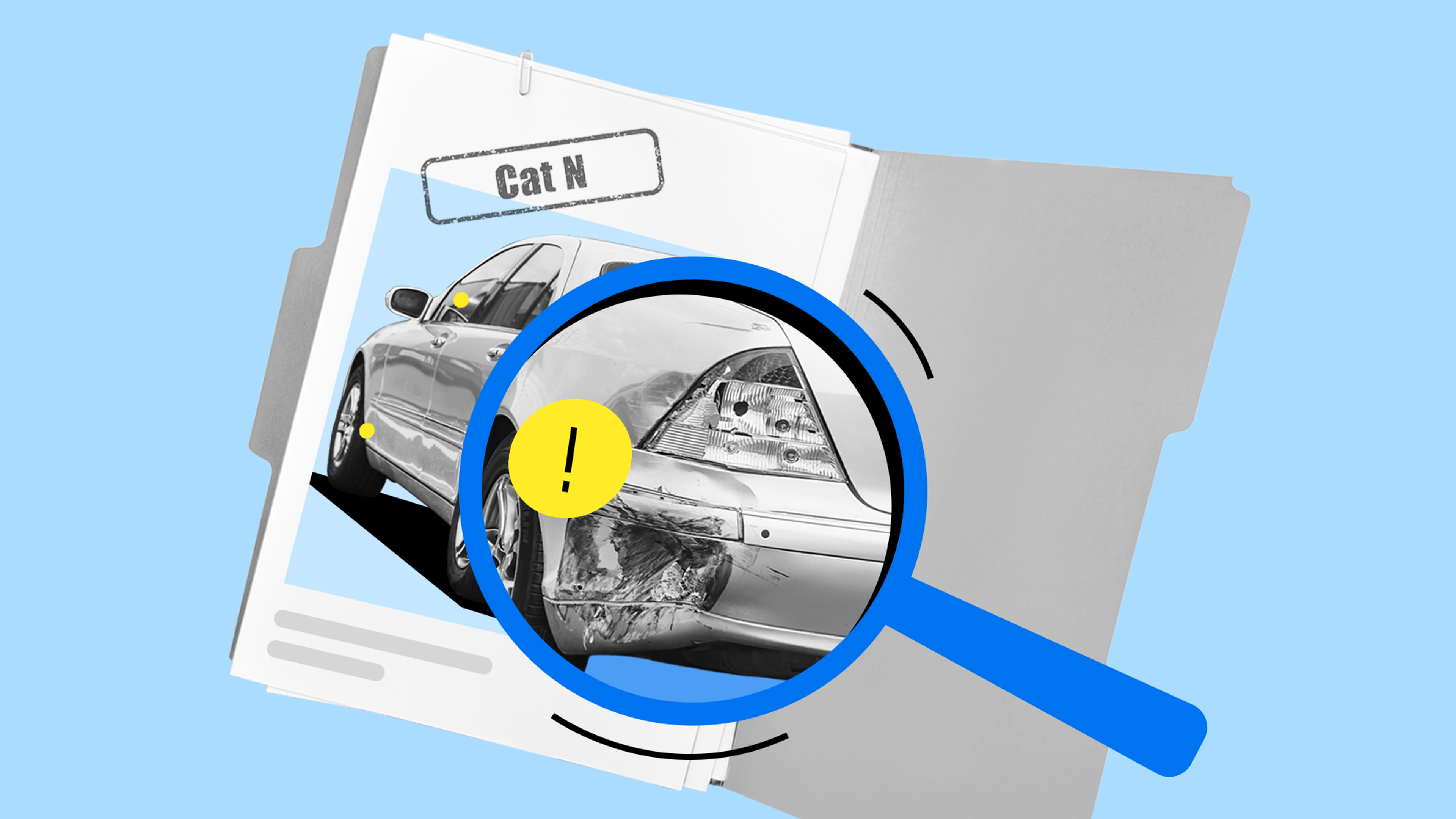
A Cat N marker can make any used car buyer pause. After all, a “write-off” doesn't sound like a good thing, does it? But can the label really tell you whether the car is worth buying?
Cat N means the car has been written off by an insurer because of non-structural damage, but it can be repaired and returned to the road. However, from the category alone, it’s impossible to know exactly what happened to the vehicle or how well it was repaired, so it’s worth looking beyond the label when picking your next ride.
In this guide, we'll explain what a Cat N car is, what kind of damage it can have, and how to check whether the car you’re eyeing has a Cat N marker.
Is the car you’re considering a Cat N?
A Cat N car isn’t necessarily a bad thing. Check its history and see what’s behind the label.
What is a Cat N car?
A Cat N car (Category N) is a vehicle an insurer has written off because it has suffered non-structural damage (this is what the “N” stands for). It means that whatever happened to it, the car’s main structural frame has not been affected.
A car may receive a Cat N marker when the cost of repairs and related expenses exceeds what the insurer considers worthwhile compared with the car's value, even if the car's core structure remains sound. So, being classed as Cat N doesn’t necessarily mean the car is unsafe or beyond repair – it’s mostly a financial decision.
For example, a £5,000 repair might be economically viable on a car worth £20,000, but could lead to a write-off on a car worth £7,000 once parts, labour, storage and other costs are taken into account.
Once repaired, a Cat N car can return to the road without any special certification due to its write-off status. Of course, it still needs to meet the usual legal requirements and the owner is responsible for making sure the vehicle is roadworthy and safe to drive.
💡 Note
Category N officially replaced the old Category D (Cat D) classification in October 2017. Both categories refer to repairable write-offs without structural damage. Although now rare, Cat D markers can still appear on older vehicles assessed before the change.
Typical Cat N damage examples
Cat N covers a wide range of damage, since almost anything that doesn't touch the chassis or safety cell qualifies. Common examples include:
- Bodywork and cosmetic damage. Dented panels, smashed bumpers, or a cracked windscreen from a low-speed collision.
- Electrical faults. Damaged wiring, faulty sensors or other electrical components, particularly in newer, tech-heavy cars.
- Interior damage. Water or flood damage, damaged upholstery or airbags and related safety components that need replacing.
- Mechanical issues. A failed engine or transmission that would cost more to repair than the car is worth, even with no impact damage at all.
- Theft-related damage. Recovered stolen cars may have damaged locks, ignition systems or wiring from forced entry.
- Hail damage. Dented body panels and a cracked or pitted windscreen from a severe hailstorm, sometimes enough on its own to exceed the car's value in cosmetic repairs.
- Vandalism. Smashed windows, slashed tyres or extensive paintwork damage can also lead to a Cat N classification.
Because the range is so broad, two Cat N cars can look completely different from each other. One might need a new bumper and headlight; another might need a full interior rebuild after flood damage. The category alone doesn't tell you which.
📍 Important nuance
Non-structural damage doesn't automatically mean minor. Cat N damage can involve electrical systems, airbags, brakes, steering, water damage, etc. The key point is that the car's structural integrity remains intact, even though the damage can still be significant or expensive to repair.
Cat N vs Cat S: what’s the difference?
The key difference between Cat N and Cat S is whether the car's structural safety cell was damaged.
The safety cell is the reinforced structure around the passenger compartment, including the chassis rails, A and B pillars, and crumple zones. It is designed to protect people inside the car. Cat S damage affects this structure directly, such as a bent chassis rail or crushed pillar. Cat N damage does not affect it, even if the damage elsewhere on the car looks extensive.
The difference especially matters when you're considering a used car:
- Repair complexity. Cat S repairs can involve complex repairs and precise realignment to restore the vehicle's structure. Cat N repairs are generally more straightforward, depending on the damage.
- Safety considerations. Damage to a car's structure can affect its crash protection if it isn't repaired correctly, which is why a Cat S car deserves particular scrutiny. With Cat N, the damage is non-structural, but you should still check that all repairs were carried out properly.
- Insurance and resale. Both categories can affect insurance and resale value, but Cat S cars may be harder to insure and sell because buyers tend to see structural damage as a greater risk.
Both Cat N and Cat S cars can be repaired and returned to the road. The category itself doesn't tell you how well the repairs were done, so checking the car's history and having it professionally inspected can help you understand what you're actually buying.
Here’s how Cat N and Cat S compare with the rest of the UK write-off categories:
Category | Damage | Can it be repaired? | Can it return to the road? |
Cat N | Non-structural | ✅ Yes | ✅ Yes |
Cat S | Structural | ✅ Yes | ✅ Yes |
Cat B | Severe damage | ❌ No, generally only parts can be salvaged | ❌ No |
Cat A | Severe damage | ❌ No, must be scrapped | ❌ No |
Does Cat N affect insurance?
Yes, a Cat N history can affect your insurance options. Some insurers may charge more to cover a previously written-off vehicle, while others may not offer cover at all.
The good news is that this is easy to check. Get a few insurance quotes using the car's details before buying the car, rather than assuming you’ll be able to insure it with no issues. That way, you can see whether the lower purchase price of a Cat N car still makes financial sense once insurance is factored in.
Keep in mind that the impact can also depend on why the car was written off. A Cat N car with documented cosmetic or hail damage may be viewed differently from one that suffered flood, electrical or mechanical damage.
⚠️ Important
If you buy a vehicle that has previously been written off, always inform your insurer. If you fail to do so, your insurer can reject any claim you make on the grounds of non-disclosure, according to GOV.UK.
How to check if a car has a Cat N or other write-off marker
The easiest way to check whether a car has a Cat N or another write-off category is to run a vehicle history check using its registration number or VIN. A write-off marker isn't always obvious from the car itself, especially if it has been repaired, so checking its history can reveal what happened before you buy.
And there's a good reason to check: damage history is more common than many buyers assume. carVertical data shows that over 23% of vehicles checked in the UK had a damage record of some kind, ranging from minor bodywork to serious structural harm.
You can start with the free GOV.UK MOT history check, which shows MOT results, mileage readings and advisories. However, it doesn't tell you whether a car has been written off or which category it received.
A carVertical report can give you a broader picture by checking the car's recorded history. Depending on the available data, you may find:
- Write-off category, including Cat N, Cat S and other UK write-off categories
- Parts affected, showing which areas of the vehicle were reported as damaged
- Possible cause of damage, such as a collision, water, vandalism, etc.
- Damage groups, indicating the type of components affected
- Past repair cost estimates, when available
- Damage records and photos, where available
For example, a damage record may show the write-off category alongside the affected parts, possible cause and estimated repair costs. This gives you more context than simply knowing that the car has a Cat N marker.
Check for write-off categories and the story behind them
See the car’s write-off history, reported damage and other important details to help you decide if it’s worth buying. Enter reg or VIN below.
Can you remove a Cat N from a car?
No, a Cat N marker cannot be removed from a car's history. Once an insurer records a write-off with the Motor Insurance Anti-Fraud and Theft Register (MIAFTR), that record is permanent, regardless of how well the car is later repaired.
This can sometimes be confusing because Cat N cars don't go through the same V5C process as Cat S vehicles. However, that doesn't mean the Cat N history disappears after the car is repaired or changes hands.
What can change is the story around the write-off. Repair invoices, photos of the damage and repairs, a clean MOT history and evidence of good maintenance can give potential buyers more confidence in a Cat N car. The marker itself, however, remains part of the vehicle's history.
Be wary of anyone claiming they can remove a genuine Cat N marker. If you're considering a Cat N car, it's better to understand what happened and how it was repaired than to try to hide its history.
Is a Cat N car worth buying?
Often, yes, if the car was repaired properly and the price reflects its history. A Cat N car can offer good value because its recorded damage was non-structural, and the repairs may have been relatively straightforward. But Cat N doesn’t automatically mean the car is a good buy. The type of damage, quality of the repairs and the car’s overall condition all matter.
💡Note
Cat N marker isn't necessarily a reason to walk away, but it is a reason to investigate further.
Potential advantages of buying a Cat N car
- Lower purchase price. Cat N cars are usually worth less than equivalent cars without a write-off history. The exact difference depends on the car, its damage and the quality of the repairs.
- Non-structural damage. Cat N means the recorded damage did not affect the vehicle’s structural frame, which can make it less complex to repair than a Cat S car.
- Different types of damage. Cat N can cover everything from cosmetic and hail damage to theft, electrical or water damage. Some types may be relatively straightforward to repair, depending on what happened.
- Potentially good value. If the damage was limited and the repairs were carried out properly, a Cat N car can offer a way to get a suitable vehicle for less than you would pay for an equivalent car without a write-off history.
Risks of buying a Cat N car
- Repair quality can vary. The Cat N category tells you about the type of damage, not how well the car was repaired. Poor repairs can lead to problems later.
- Lower resale value. A Cat N marker remains part of the car's history, which can make it harder to sell and reduce the price you can get for it later.
- Insurance can be more complicated. Some insurers may charge more for a Cat N car, while others may not offer cover, so it's worth checking before you buy.
- The cause of the write-off matters. Two Cat N cars can have very different histories. A car written off after hail damage is a very different proposition from one affected by flood or electrical damage.
- Finance may be harder to arrange. Some lenders may be reluctant to finance a car with a previous write-off, so check your finance options before committing to the purchase.
Overall, a Cat N car makes the most sense when the write-off cause was low-risk, the repair is well documented, and the price reflects both the history and the smaller resale market. Skipping the history check and the independent inspection is where buyers tend to run into trouble.
Frequently asked questions
Article by
Renata Liubertaitė
Renata is a content writer at carVertical who specialises in vehicle history reports and their practical use. With several years of experience analysing car histories and product data daily, she helps readers recognise red flags in the used car market and avoid common pitfalls when choosing their next ride.