
17/11/2026
What is a V5C logbook? What it looks like and how to use it

Renata Liubertaitė
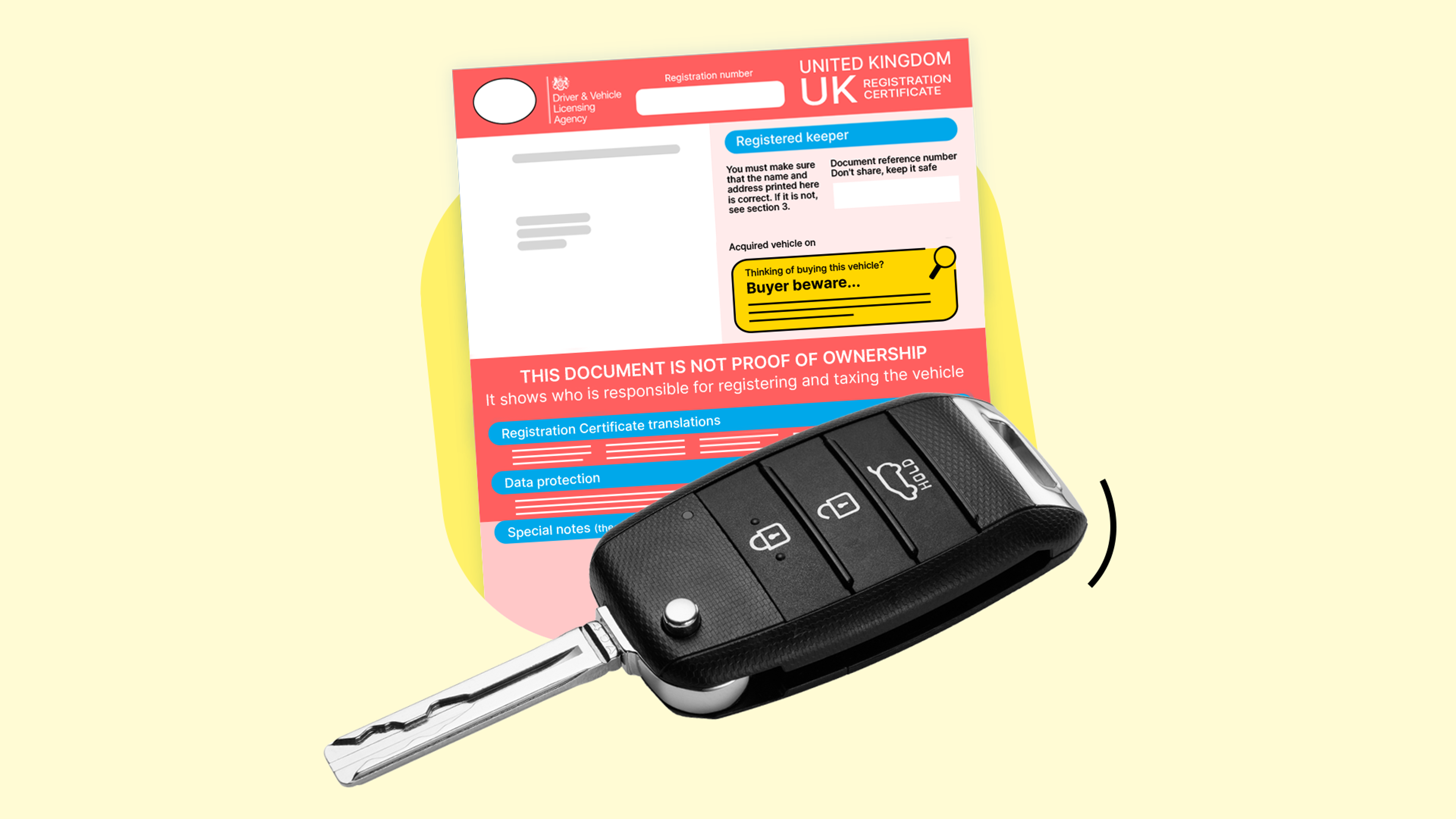
Every car’s got one, but how often do you really think about your V5C logbook? It’s easy to forget about, right up until a buyer is standing on your drive asking to see it.
Put simply, the V5C is the vehicle registration certificate, issued by the DVLA. It’s there to record the car's registered keeper, and most people just call it the logbook or the V5. You'll need it to sell a car, tax it or update your details.
This guide covers what it looks like, what information's in it and how to use it.
📎 Key takeaways:
- Who gets it: The DVLA sends the V5C to the registered keeper at the address on its records.
- Proof of ownership: It shows who's responsible for the car, not who legally owns it.
- If it's lost: Order a replacement from GOV.UK online, by phone or by post. It usually costs £25.
- Vehicle history: It won't reveal outstanding finance, mileage discrepancies or a car's full write-off history.
A V5C is just the beginning
Check a car's history with carVertical to find out what else might need a closer look before you buy.
V5, V5C or logbook: what the document actually is
V5C is the official name of the UK vehicle registration certificate, also known as the V5C registration certificate or simply the logbook. So, if you’re wondering what a V5, V5C, or V5 document is, they’re all different names for the same document.
The purpose of V5C is to certify who the DVLA has as the registered keeper – the person responsible for the car and for telling them about any changes. All cars are issued with one, and since it’s a key identity document, the DVLA advises that you shouldn’t buy a vehicle without a V5C included.
It’s important to always keep it somewhere safe at home rather than in the car, too, as a thief can use it to sell the car on more easily. The DVLA also asks keepers not to share, copy or photograph its 11-digit reference number, so be aware when selling privately.
What does a V5C look like?
The current version, issued since 15 April 2019, is red with multi-coloured numbered blocks at the bottom of the front cover. Inside, the green new keeper slip (V5C/2) goes to a buyer, and the yellow section is for sales to a motor trader.
If there are no coloured blocks on the cover, you have an older-style logbook. In fact, besides the current one, there are two other versions you might come across:
1.Blue: the original design. A huge quantity of blank blue V5Cs were stolen in 2006, and the DVLA finished replacing them with red ones in 2012.
2.Older red: red, with no coloured blocks on the front.
Both red versions are valid, so the answer to "what does a logbook look like?" depends on when yours was issued. A blue one isn't automatically fake, but it could be a warning sign, which is why the DVLA advises buyers to get the seller to swap it for a red one before handing money over.
What information is on a V5C?
Along with its numbered sections and change-of-keeper slips, your V5C logbook also has the car's key details. When buying, check these against the car and the seller:
1.Registration number: it should match the number plates.
2.Date of first registration: should fit the car's age.
3.Registered keeper: the name and address should match the seller's ID and where you're viewing the car (which is why viewing at their home is best to verify).
4.Make, model and colour: any mismatch needs a good explanation.
5.VIN: usually 17 characters on modern cars, and should match the VIN on the car itself.
6.Engine number, size and fuel type: should match what's under the bonnet.
7.Number of former keepers: shows how many owners a car has had, but not who they were.
Remember that the V5 log book isn't a reliable record of a car's past, though. It won't show outstanding finance or mileage discrepancies, and it isn't a complete record of insurance write-offs either.
Where is the V5C document reference number?
On the current design, the 11-digit document reference number is found at the top of the front cover.
You'll use it to tax the car as the current keeper, make a SORN (Statutory Off Road Notification), or tell the DVLA you've sold the vehicle. Always use the number from your latest V5C, and don't confuse it with the 16-digit reference on a vehicle tax reminder (V11) or the 12-digit one on the green slip.
If you’re wondering where you can find your V5C number without the logbook, unfortunately there’s no easy way to look it up. Instead, tax the car with a recent tax reminder, or order a replacement V5C and tax the car in the same application.
V5C form sections: which part to fill in for different situations
Filling in the wrong part of the V5C form can delay changes you want to make, so check which style you have first.
Task | New style (coloured blocks) | Older style |
Selling privately by post | Section 2, then give the buyer the green slip | Section 6 plus the declaration in section 8, signed by you and the buyer. Give the buyer the green slip. |
Selling privately online | Use the 11-digit number from your latest V5C, give the buyer the green slip and destroy the rest | Same |
Selling to a dealer or scrapping | The yellow motor trade section. If the dealer tells the DVLA online, give them the logbook and destroy only the yellow section. | Same |
Changing your address or name | Section 3, sent to the DVLA address in section 3 | Section 6, sent to the DVLA address in section 8 |
Changing vehicle details (e.g. colour, engine) | Section 1 | Section 7 |
Exporting permanently | Section 5: fill it in, detach it and send it to the DVLA | The permanent export section: fill it in, detach it and send it to the DVLA |
Is a V5C proof of ownership?
No. A V5C records the registered keeper, the person responsible for the car, not the legal owner. The DVLA has warned that many drivers wrongly believe it’s part of what proves car ownership, and it’s something criminals often take advantage of.
In fact, the two can often differ. Buy a car on hire purchase or PCP, and you'll usually be the registered keeper while the finance company owns the car until the final payment. It’s just one example of why it’s a good idea to understand the difference between registered keeper vs owner of a car.
Ultimately, ownership is shown by paperwork such as a bill of sale or receipt, so always keep evidence where possible.
When do you need your V5C?
You'll need your V5C, or part of it, to:
- sell or buy a car
- tax it or make a SORN
- scrap or export it
- change your name, address or the car's details
Can you tax a car without a V5? Yes. A new keeper can tax the vehicle with the 12-digit reference on the green new keeper slip, and a current keeper can use a recent tax reminder. Without the slip, a new keeper can't tax the car until they get a new V5C by post.
Can you sell a car without a V5? Yes, you just tell the DVLA by post instead. Many buyers will walk away, though, so it's usually better to order a replacement first by following our steps on how to transfer car ownership.
When to update your V5C and how to do it
You must tell the DVLA when your address, name or vehicle details change, so they can issue a new V5C showing the update.
- Address: The quickest V5C change of address is online, with your registration number, logbook reference number and new UK address. It's usually free, but if tax is due within 4 weeks, tax the car first. To change address on V5 by post, use section 3 (new style) or section 6 (older style).
- Vehicle details: For changes such as colour or engine size, fill in the vehicle details section and post the logbook to the DVLA.
⚠️ Changed your address? Update your V5C
Your V5C must show your current address, and you can be fined up to £1,000 if you don't tell the DVLA when you move.
Lost or damaged V5C: how to get a replacement
If you have lost your V5C, or yours has been stolen, damaged or destroyed, you can order a replacement V5 from the DVLA.
1.Online or by phone: If you're the registered keeper and nothing needs changing, apply online or by phone with the registration number, VIN and the name and postcode on the V5C. It usually costs £25 and arrives within 5 to 7 working days. Contact the DVLA if it hasn't come after 2 weeks.
2.By post with form V62: Apply by post if you also need to change your name, address or vehicle details, or never received a V5C for a new vehicle. It costs £25, and the logbook usually arrives after 4 weeks.
In cases where you need an urgent V5 replacement, bear in mind that there's no same-day service, so the online route is the fastest, and you can tax the car in the same application. Fees aren't refunded, though, so have one last look for that lost V5 before you pay up.
How long does a V5C take to arrive?
It usually takes a V5 around 5 to 7 working days to come if it's handled online, and around 4 weeks by post.
Situation | Usual time | Cost |
After buying: seller told the DVLA online | 5 to 7 working days | Free |
After buying: registered by post | Within 4 weeks | Free |
Replacement online or by phone | 5 to 7 working days | £25 |
Replacement by post (V62) | Usually after 4 weeks | £25 |
Name change by post | Up to 6 weeks | Usually free |
Still waiting after buying a car? Check the last log book (V5C) issue date on the free vehicle enquiry, and contact the DVLA if nothing has arrived after 4 weeks. If you leave it past 6 weeks without telling the DVLA, the replacement costs £25, so it’s best not to delay. If the car was registered to you by post, you can apply with a V62 instead, free of charge if you include the green new keeper slip from the most recent V5C.
How to check a V5C before buying a used car
Check that the V5C is genuine, that it matches the seller and the car, and that its issue date matches DVLA records. Then make sure of the following:
1.It's the original. Look for the "DVL" watermark, and make sure the serial number isn't between BG8229501 and BG9999030, or BI2305501 and BI2800000. If it is, the V5C might be stolen, so call the police when it's safe.
2.It's not the old blue version. If it is, ask the seller to replace it with a red one before you pay.
3.The name and address match the seller and the address where you're viewing the car.
4.The VIN, engine number and registration match the car. A mismatch could point to number plate cloning.
5.The issue date matches. Compare it with the free vehicle enquiry. A very recent date is a reason to ask why.
Even a perfect V5C can belong to a car with finance owed, a past holding insurance write-offs, or a mileage problem. It's at this point a history check comes in very useful.
What the V5C won't tell you, but a carVertical report can
A genuine V5C shows who's responsible for the car, but can’t tell you what it's been through. Before you buy, use a carVertical report to check for recorded damage and write-offs, mileage discrepancies, outstanding finance, ownership changes and theft records to check if a car is stolen.
By pulling these records together in one place, a carVertical report creates a much clearer view of the car in front of you. Skip these checks, and you could face unexpected repair bills, a dispute with a lender, or a car that's had far more keepers than you thought, like this Audi RS3 with 16 previous owners.
The logbook checks out. What about the car?
A carVertical report can reveal damage history, mileage discrepancies, and other red flags that the V5C doesn't show. Find out what's on record.
Frequently asked questions
Article by
Renata Liubertaitė
Renata is a content writer at carVertical who specialises in vehicle history reports and their practical use. With several years of experience analysing car histories and product data daily, she helps readers recognise red flags in the used car market and avoid common pitfalls when choosing their next ride.