
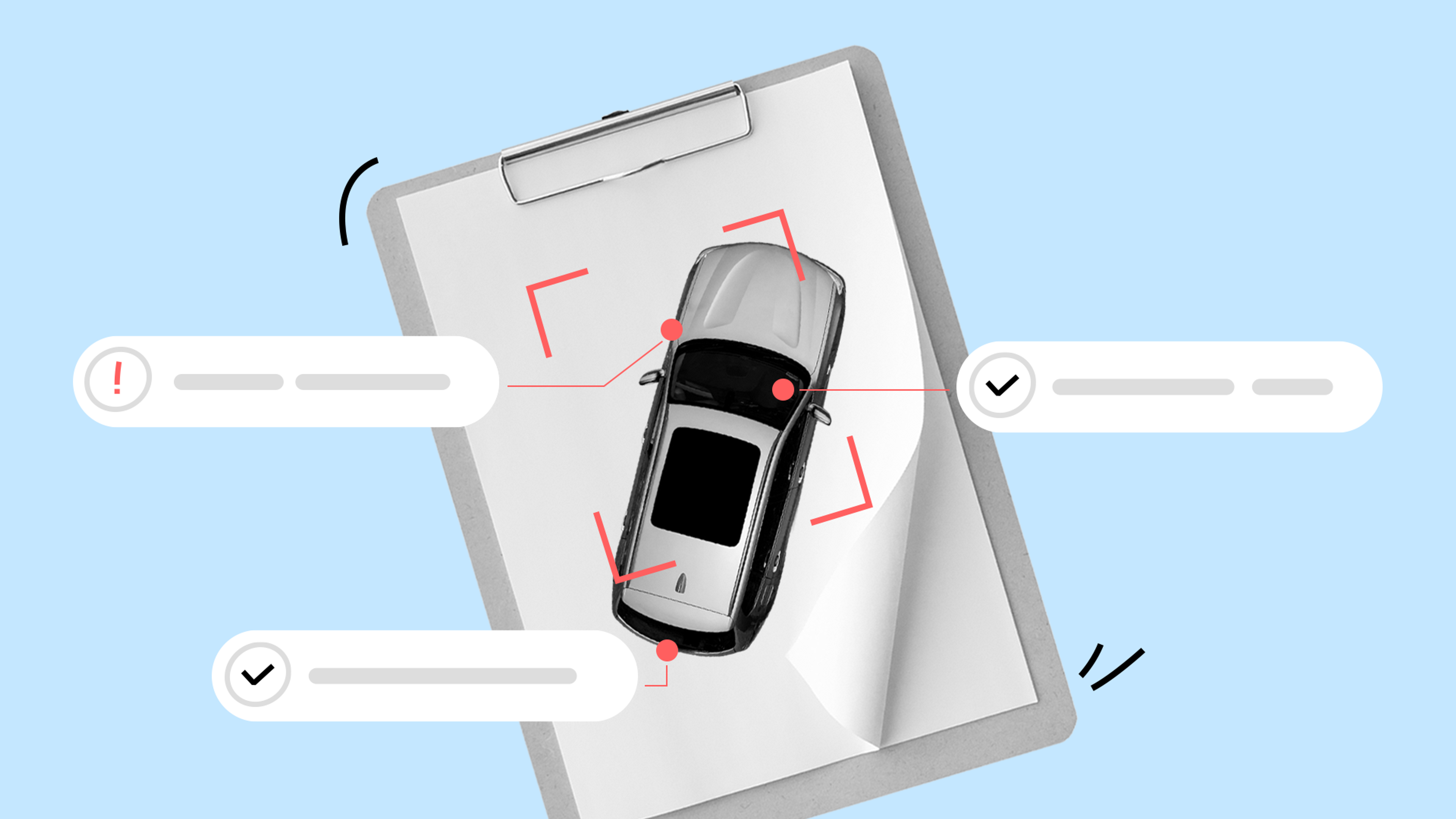
Will that knock from the suspension or a weak battery cost you a pass in an MOT? Questions like these are common amongst UK drivers. Not knowing exactly what is checked on an MOT makes the whole test feel like a lottery, when in reality it's a defined, predictable process.
An MOT isn't a random inspection. It's a legally required check that confirms your car meets minimum road safety and environmental standards, covering everything from your brakes and tyres to your lights and exhaust emissions. Every tester works through the same official checklist, so there's no guesswork if you know what to look for beforehand.
Let’s walk through what gets examined during the test, what typically causes a failure, and how to prepare so there are no surprises on the day.
Unsure if you know your vehicle well enough?
If you bought or are buying a used car, some serious problems can hide beneath the surface. Get a history report to reveal them!
When is an MOT needed?
It depends on your car’s age. New cars need their first MOT on the third anniversary of their registration date, and every year after that for as long as you keep it on the road.
There are a few exceptions to this timeline:
- Northern Ireland works differently. Cars and motorcycles first need an MOT (called an MOT there too, unlike the rest of the UK where it's technically the same test under a different framework) once they turn four years old, not three.
- Goods vehicles and larger passenger vehicles may need testing sooner, depending on their weight and use.
You can book and take the test up to one month (minus one day) before your current MOT expires, and still keep your original renewal date. For example, if your MOT is due on 20 September, you can get it tested from 21 August onwards without losing any time on the new certificate. Testing before the one-month window is possible, but you'll lose the remaining days on your current MOT, since the new expiry date is set exactly one year from the test date.
Not every vehicle needs annual testing indefinitely, though. Vehicles built more than 40 years ago qualify for a rolling MOT exemption, provided they haven't had substantial changes made to the chassis, suspension, axles, or engine in the last 30 years. This exemption is self-declared when you tax the vehicle, and it doesn't mean the car is exempt from being roadworthy – you're still legally required to keep it in a safe condition to drive.
What is checked in an MOT? The full checklist
Here's the full breakdown of what does an MOT check:
- Exterior lights – headlights, indicators, brake lights, fog lights, and reflectors must be secure, undamaged, and correctly aligned. The beam pattern is checked so it doesn't dazzle oncoming drivers.
- Tyres – tread depth must be at least 1.6mm across the central three-quarters of the tyre, with no cuts, bulges, or exposed cord. The spare tyre isn't tested unless it's fitted as one of the four in use.
- Brakes – the tester checks brake efficiency, condition of the discs and pads (where visible), the handbrake, and the brake warning light.
- Steering and suspension – any excessive play, wear, or damage to steering components, springs, shock absorbers, and joints is flagged.
- Seatbelts – every belt must extend and retract smoothly, lock properly, and be free of fraying or damage.
- Windscreen, wipers, and washers – the windscreen must be free of cracks or chips within the driver's critical viewing area, and wipers and washers need to work properly.
- Horn – it must work and be loud enough to be heard clearly.
- Exhaust and emissions – the exhaust system must be secure and free of leaks, and emissions are tested against limits for the vehicle's fuel type and age.
- Registration plates – both plates must be legible, correctly formatted, and securely fitted.
- VIN (Vehicle Identification Number) – this must be clearly displayed and match the car's documents.
- Mirrors – all required mirrors must be present, secure, and undamaged.
- Bodywork and structure – the tester checks for sharp edges, corrosion near key structural points, and any damage that could pose a safety risk.
- Wheels – checked for damage, security, and correct fitment.
- Doors and seats – doors must open and close properly, and the driver's seat must be secure and adjustable where designed to be.
- Fuel system – checked for leaks and a secure, working fuel cap.
It boils down to one core principle: every item on the list is checked because it affects either your safety, the safety of other road users, or the environment. A tester isn't looking for perfection – they're confirming that each component works well enough to keep you, your passengers, and everyone else around you safe.
❗Important
Remember that an MOT is a snapshot of your car's condition on the day of the test, not a guarantee of reliability for the next 12 months. A component that's borderline today could fail well before your next renewal, so it's always worth keeping an eye on wear items.
Why do MOT tests include an exhaust emissions test?
The exhaust emissions test is designed to confirm that a vehicle isn't emitting more pollutants than legally permitted, protecting both air quality and public health. Testers measure substances such as carbon monoxide and hydrocarbons in petrol cars, and smoke opacity in diesels, checking the results against limits set for the vehicle's age and fuel type.
Electric vehicles are exempt from this part of the test, since they have no exhaust system or tailpipe emissions to measure. Hybrid vehicles, however, still go through emissions testing whenever their petrol or diesel engine is running.
Things that are NOT checked in an MOT
An MOT covers a lot of ground, but it isn't a full mechanical inspection. Several things drivers shouldn’t worry about when preparing for an MOT:
- Clutch condition – wear isn't assessed unless it creates a separate safety issue.
- Engine internals – oil condition, timing belts, and general engine health aren't inspected.
- Gearbox and transmission – not tested unless a fault is visibly affecting safety.
- Air conditioning – not part of the test at all.
- Interior electronics – infotainment systems, sat-nav, and various comfort features aren't checked.
- Bodywork cosmetics – dents, scratches, and paint condition are ignored unless they create sharp edges or expose structural corrosion.
- Service history – an MOT doesn't check whether the car has been serviced on schedule.
Theoretically, a car can pass its MOT with expensive problems beneath the surface. A clean certificate confirms roadworthiness on the day, not the car's overall mechanical condition.
What can fail an MOT?
What can fail an MOT depends on how serious the problem is, since not every fault noted during the test actually stops your car from passing. MOT results are graded into categories, and only some of them affect whether you get a pass certificate.
- Dangerous – an immediate risk to road safety or the environment. The car fails, and you shouldn't drive it until it's repaired.
- Major – could affect safety, the environment, or other road users. The car fails, and the fault must be fixed before it can pass.
- Minor – doesn't have a significant effect on safety or the environment. The car still passes, but the fault is noted on the certificate and should be fixed as soon as possible.
- Advisory – not a current problem, but something worth monitoring, since it could develop into an issue before your next MOT.
So, when it comes to what actually fails the test, it's the dangerous and major faults that matter most. Common examples include:
- Tyres below 1.6mm tread depth, or with cuts, bulges, or exposed cord.
- Brakes that are inefficient, worn beyond limits, or leaking.
- Headlights or brake lights that don't work, are damaged, or are misaligned.
- A cracked or chipped windscreen within the driver's critical viewing area.
- Excessive play or damage in the steering or suspension.
- Seatbelts that don't lock, retract, or are visibly damaged.
- Excessive exhaust emissions beyond the legal limit for the vehicle's age and fuel type.
- Corrosion near structural points, such as suspension mounts or seatbelt anchorages.
- A horn that doesn't work or can't be heard clearly.
💡Reminder
Minor faults and advisories won't stop your car from passing, but they're often early signs of wear. Fixing them early can save you from a failed MOT or a costly repair later.
Let’s say your car failed an MOT – what now?
If your car fails, you'll be given a refusal of an MOT test certificate, listing every dangerous and major fault that needs fixing. There's no fixed legal deadline for fixing it after failing an MOT, but in practice, you need it sorted before your current MOT certificate expires, since driving without a valid one is against the law in most circumstances.
This is where can you drive without MOT becomes an important question, and the answer depends entirely on timing and the nature of the failure:
- If your previous MOT certificate is still valid when the new test fails, you can legally continue driving the car until that old certificate expires. However, the car must still be genuinely roadworthy – if it's failed for a dangerous fault, driving it could invalidate your insurance and put you at legal risk regardless of the paperwork.
- If your MOT has already expired, or the failure was marked as dangerous, you cannot legally drive the car at all, except to a pre-booked appointment for repair or a retest at a garage or test centre.
Most testing centres offer a partial retest within 10 working days if the car is left with them or returned to the same centre, which usually only covers the items that failed rather than the full test again. Taking the car away and coming back later, or going to a different centre, usually means paying for a full retest instead.
MOTs are simpler if you know the history of your car
Failed MOTs rarely come out of nowhere. A worn tyre, corrosion in unusual places, or a suspension element that always wears out too early – past accidents or even mileage higher than you think can cause that.
A carVertical vehicle history report can reveal missing details before you ever book a test or even buy a used car. It can show whether the car was seriously damaged, has fake mileage, or maybe was used as a taxi, rental, or police vehicle – all such details can point to exactly where issues might be hiding. If a car has a Cat S or Cat N marker on record, for instance, structural or mechanical issues are far more likely to resurface during testing.
The report also shows previous MOT test results and advisories, so you can see a pattern rather than a single snapshot. A car that's picked up the same advisory two years running is telling you something the seller might not.
Whether you want to check your own car or the car you’re buying, all you need is to enter the car’s registration number or VIN in the banner below or start from our homepage here – whichever works for you.
Know your car's MOT history before you book the test
Check previous MOT results, mileage records, and damage history with a carVertical history report.
How long does an MOT take and how much is it?
In most cases, an MOT takes 45 minutes to an hour from start to finish. The exact timing can shift slightly depending on the vehicle and how busy the test centre is on the day.
If you're combining the test with routine maintenance, it’s typically closer to 1.5 to 3 hours, since the garage needs extra time to work through service items and deal with anything the MOT itself flags along the way.
A few factors can affect the timing:
- Retests tend to be much faster. If you leave your car at the same centre, or bring it back within the retest window, the tester usually only rechecks the specific items that failed, which can take as little as 15 to 30 minutes rather than a full re-run.
- Larger or more complex vehicles, such as vans or heavily modified cars, can take the tester longer to work through than a standard family hatchback.
- Busy test centres can mean a wait before your car is even seen, so booking ahead is generally safer than turning up on the day.
As for how much an MOT costs, the government sets a maximum fee that testing centres are allowed to charge, though many garages charge less to stay competitive. Current maximum rates are:
- Cars and passenger vehicles with up to 8 seats: £54.85
- Motorcycles: £29.65
- Vans (up to 3,000kg): £58.60
These figures are ceilings rather than fixed prices, and typical costs for cars sit anywhere between £25 and £45. The MOT fee itself is exempt from VAT, though VAT does apply to any repair work carried out alongside it.
Preparing for an MOT
Knowing what to bring to an MOT makes the appointment itself far more straightforward:
- The vehicle itself, which should be cleaned enough that the tester can properly inspect the bodywork, wheels, and registration plates without obstruction.
- Your V5C logbook isn't strictly required for the test, but it's useful if the centre needs to confirm the vehicle's details.
- The MOT reminder or previous certificate, if you have it, helps speed up finding your vehicle's test history in the system.
- A spare key, if the car has any electronic or mechanical quirks the tester might need explained.
- Payment, since most centres expect payment on the day, either by card or cash depending on the garage.
It's also worth doing a quick pre-test check yourself before dropping the car off:
- Test all lights, indicators, and the horn. Clean the headlights.
- Check tyre tread depth and look for any obvious damage or bulges.
- Top up washer fluid and check the wipers clear the screen properly.
- Look over the windscreen for chips or cracks in the driver's line of sight.
- Make sure the fuel tank has enough fuel for the tester to complete the emissions check.
Turning up unprepared is a waste of a test slot, especially since an MOT is only worth booking once your current certificate is within its final month. You can get tested any time from one month (minus a day) before expiry without losing any days off your new certificate, but booking too early outside that window means starting the 12-month clock from the test date instead.
Legally, you also can't drive a car with an expired MOT except to a pre-booked test appointment or to a garage for repairs directly related to that test. So if your certificate has lapsed, the drive to the test centre itself needs to be planned carefully and, ideally, booked in advance rather than left to the last minute.
A car that's clearly been looked after before the test tends to go through the process more smoothly, and it can save you an unnecessary retest for something minor you could have caught yourself.
Frequently asked questions

Article by
Evaldas Zabitis
Evaldas is an automotive expert and writer at carVertical, focusing on technical automotive topics. With studies in motor transport electronics and over a decade of experience in car flipping and automotive writing, he helps readers better understand vehicle history, inspections, maintenance, and common used car buying risks.