
24/09/2026
20 new electric cars with the longest range in the UK

Evaldas Zabitis
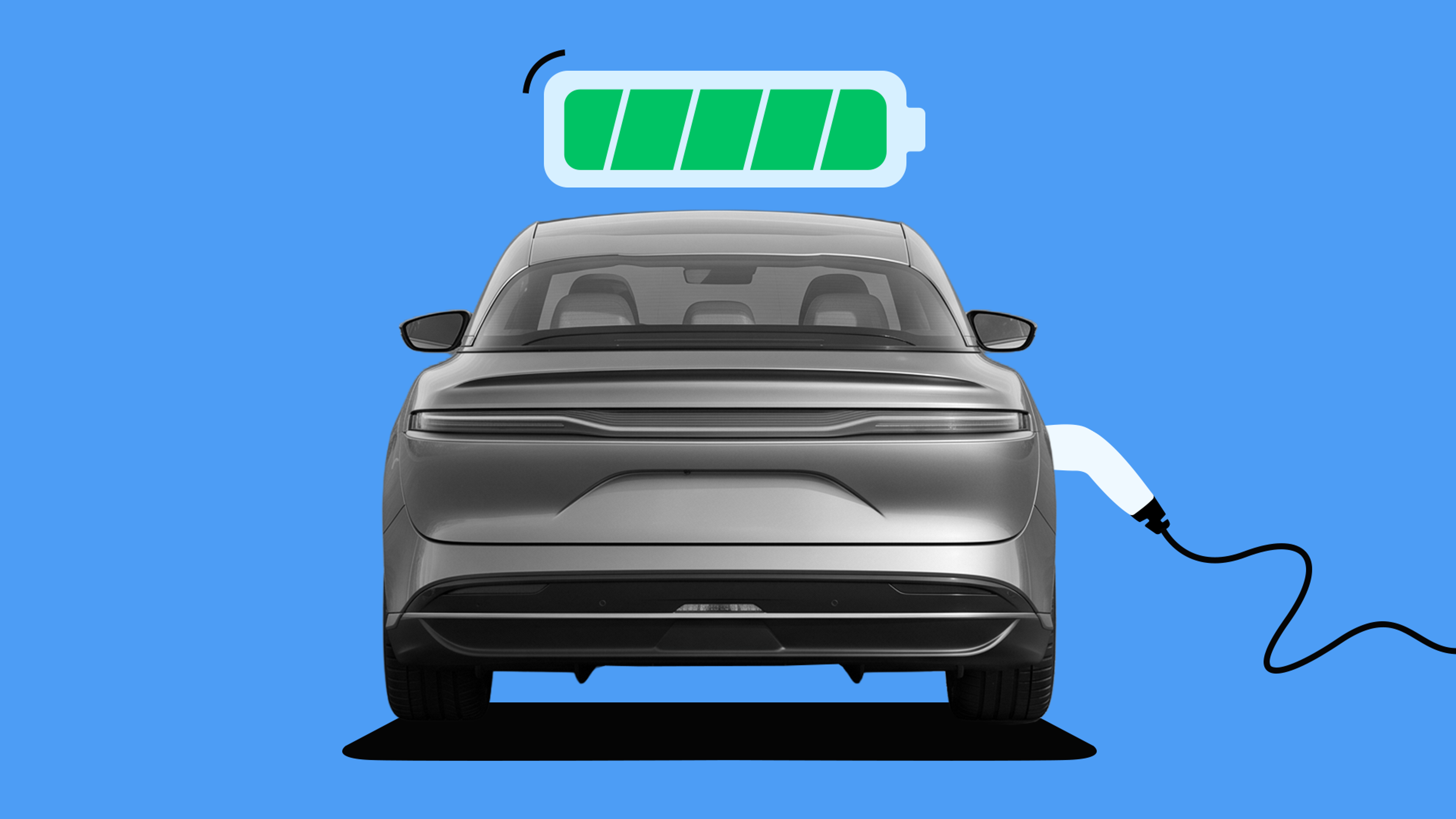
Driving down a bleak A-road during winter, you notice the battery range in your car dropping much faster than expected. It’s an alarming situation that pushes buyers to consistently rank range at the top of their shortlists, and proves why finding the longest range electric cars UK drivers can buy today is so important.
We’ve pulled together a list using manufacturers’ official WLTP combined figures for cars currently on sale in the UK, ranked from longest to shortest. The current top rank belongs to the facelifted Mercedes-Benz EQS 450+ with up to 574 miles, which heads up a solid set of cars with some interesting new entrants for 2026.
Looking for a reliable car?
A well-maintained and undamaged car is the most reliable! Check any VIN code to make sure you're not buying a wreck:
20 new electric cars with the longest range
Every entry below shows the highest-range trim of each model, but remember that even electric cars with longest range perform differently in the real-world. There’s typically a 10 to 30% loss depending on speed, temperature and wheel size, so view these numbers as ceilings rather than guarantees.
1. Mercedes-Benz EQS 450+: 574 miles
- Starting price (RRP): approx. £100,000 (TBC)
- Battery capacity: 122 kWh (approx. 118 kWh usable)
- Charging time: 10 to 80% in approx. 30 minutes on a 350 kW charger
The facelifted 2026 EQS 450+ is the current top of the table, due to its new 800V architecture, a two-speed rear axle and a low drag coefficient. Mercedes claims up to 574 miles WLTP from the 122 kWh pack, with 350 kW DC charging adding around 198 miles in 10 minutes.
It is a five-metre luxury saloon built for high-mileage executives and salary-sacrifice drivers who want the range crown without a plug stop. Despite being the longest range ev, the trade-off is a six-figure price tag and a footprint that makes urban parking difficult.
2. Volvo EX60 P12 AWD: 503 miles
- Starting price (RRP): £64,860 OTR (P12); range opens at £56,360 for the P6
- Battery capacity: 112 to 117 kWh usable
- Charging time: 10 to 80% in around 18 to 19 minutes on a 400 kW charger
The EX60 is the highest-range electric SUV you can actually order in the UK today, and the range leader among cars with confirmed delivery this side of 2027. Volvo's cell-to-body construction, 800V electrics and 671 bhp dual-motor drivetrain deliver 503 miles WLTP alongside a 3.9 second 0 to 62 mph time.
It also gets 22 kW bidirectional AC charging, a 10 year battery warranty and a Google-based infotainment system. Note that P12 deliveries start in January 2027, though the shorter-range P6 and P10 land from September 2026.
3. BMW iX3 50 xDrive: 500 miles
- Starting price (RRP): £58,755 OTR (iX3 40 opens at £53,250)
- Battery capacity: 108.7 kWh usable
- Charging time: 10 to 80% in around 21 minutes on a 400 kW charger
The new iX3 50 xDrive is the first car on sale in the UK to break 500 miles WLTP, and it undercuts the Volvo by around £6,000. Its 800V Neue Klasse platform combines 463 to 469 bhp with 400 kW peak DC charging, making it good for around 231 miles added in 10 minutes.
The important caveat is wheel size. That 500 mile claim applies to the smallest wheels, and specifying 21 or 22 inch rims drops the figure to about 449 miles. Deliveries started in summer 2026.
4. Mercedes-Benz CLA 250+: 484 miles
- Starting price (RRP): £45,615 OTR
- Battery capacity: 85 kWh
- Charging time: 10 to 80% in approx. 22 minutes on a 320 kW charger
Mercedes' compact electric saloon is probably the most efficient car on this list, getting 484 miles WLTP from its relatively small 85 kWh pack. A two-speed rear gearbox and 800V do the heavy lifting, with 320 kW DC charging keeping motorway stops brief.
If you spec 19 inch wheels rather than the aero-optimised standard set, range drops to about 462 miles. Independent tests show roughly 400 miles in genuine mixed driving, which is still comfortably ahead of most 400V rivals.
5. Tesla Model 3 Long Range RWD: 466 miles
- Starting price (RRP): approx. £44,990
- Battery capacity: approx. 75 kWh usable
- Charging time: 10 to 80% in around 36 minutes on a 250 kW Supercharger
Only the single-motor Long Range RWD hits 466 miles WLTP. The dual-motor AWD trades some range for pace, so always confirm the variant if you are thinking of getting one. Access to the Supercharger network is still the Model 3's biggest advantage for doing regular long trips.
It is a 400V car, so peak charging speed is less than 800V, but Tesla holds its charge rate well, and not many EVs in this bracket beat it for real-world efficiency. Wheel choice can change the figure between 430 and 466 miles, so spec accordingly.
6. DS No8 Long Range FWD: 466 miles
- Starting price (RRP): approx. £48,000
- Battery capacity: 97.2 kWh usable
- Charging time: 10 to 80% in around 27 to 30 minutes on a 160 kW charger
DS uses Stellantis' STLA Medium platform and fairly aggressive coupe-SUV styling to give 466 miles from 276 bhp of front-wheel drive. Comfort is strong for this model, with a plush ride and cabin materials that are above typical Stellantis expectations.
The weak spot is charging. Peak DC input is capped at 160 kW, which lengthens motorway stops when compared to 800V cars. Euro NCAP awarded four stars rather than five.
7. Audi A6 e-tron performance: 463 miles
- Starting price (RRP): approx. £64,000
- Battery capacity: 95 to 100 kWh usable
- Charging time: 10 to 80% in around 21 minutes on a 270 kW charger
The RWD "performance" A6 e-tron liftback pairs 800V electrics with a claimed 463 to 468 miles. In independent testing, cars have returned around 4.5 miles per kWh, so real-world range in the 350 to 380 mile bracket is realistic.
Peak DC intake is at 270 kW, ahead of most 400V rivals. The Avant estate version does slightly less well on the WLTP cycle. Cabin interiors are respectable, though gloss-black plastics attract dust and fingerprints.
8. Mercedes-Benz C 400 4Matic: up to 473 miles
- Starting price (RRP): £57,995 OTR
- Battery capacity: approx. 94 kWh
- Charging time: 10 to 80% in approx. 22 minutes on a 320 kW charger
The new electric C-Class has the same 800V CLA architecture and adds a dual-motor 4Matic drivetrain. Independent trackers logged up to 473 miles WLTP for the high-range variant. UK pricing and final trim help make this an attractive option outside of simply finding which electric car has the longest range.
You can expect the same fast charging as the CLA, along with typical E-Class-lite interior tech. As always, confirm the exact WLTP figure at your dealer before signing.
9. MG IM5 Long Range: 441 miles
- Starting price (RRP): approx. £48,000
- Battery capacity: approx. 100 kWh usable
- Charging time: 10 to 80% in around 17 minutes on a 400 kW charger
The IM5 is SAIC's premium saloon, being sold in the UK under MG, and it is one of the fastest-charging cars on this list. The 800V pack is paired with a saloon body and a good-looking cabin interior.
Brand recognition and residuals are still unknowns at this stage. Performance-wise, though, the IM5 is comparable with much pricier German saloons for range and outclasses most of them for charging speed.
10. Polestar 3 Long Range: 438 miles
- Starting price (RRP): approx. £69,000
- Battery capacity: 111 kWh usable
- Charging time: 10 to 80% in approx. 30 minutes on a 250 kW charger
Polestar's family SUV is a heavyweight, but the single-motor Long Range pulls 438 miles from that big battery pack. It was the winner of the Norwegian Automobile Federation's 2025 winter range test, with just 5.18% variance from its WLTP figure in Nordic conditions.
The trade-off is clearly the bulk. While it corners well, you will feel its size in tighter streets and lanes. Newer 800V-ready versions raise the DC charging ceiling.
11. Volkswagen ID.7 Pro S: 436 miles
- Starting price (RRP): approx. £55,000
- Battery capacity: 86 kWh
- Charging time: 10 to 80% in approx. 26 minutes on a 200 kW charger
The ID.7 Pro S is the aero-saloon version of Volkswagen's ID family, and 436 miles from an 86 kWh pack is a genuinely efficient result. VW's 400V architecture caps peak DC intake at 200 kW, so it can’t beat the 800V cars for motorway top-ups, however.
Interior quality seems to have improved a lot since earlier ID cars, and the boot eats family luggage easily enough. Rear-wheel drive is standard.
12. Volvo ES90 Twin Motor: 435 miles
- Starting price (RRP): approx. £68,000
- Battery capacity: 106 kWh usable
- Charging time: 10 to 80% in approx. 20 minutes on a 350 kW charger
Volvo's electric executive saloon uses 800V electrics and 350 kW DC charging to make big-battery range possible without long stops. Order books are open right now, and deliveries are expected to follow the EX60 rollout.
The ES90 is targeting buyers who might otherwise be looking at something like the Mercedes EQE or a BMW i5. Twin-motor traction and the usual Volvo interior calm are the main selling points.
13. Peugeot E-3008 Long Range: 435 miles
- Starting price (RRP): approx. £49,000
- Battery capacity: 97 kWh usable
- Charging time: 10 to 80% in around 27 to 30 minutes on a 160 kW charger
The Long Range E-3008 uses the same 97 kWh Stellantis pack, which can be found in several places on this list. The claimed 435 miles is impressive on paper, but independent long-term testing is starting to suggest its real electric car range is a bit shorter for mixed driving.
The E-3008 also has a modern cabin with a curved twin-panel display and a small, low-mounted steering wheel that some drivers love and others not so much. 160 kW peak DC is the main sticking point.
14. Porsche Taycan (base RWD): 434 miles
- Starting price (RRP): approx. £90,000
- Battery capacity: 105 kWh (Performance Battery Plus)
- Charging time: 10 to 80% in approx. 18 minutes on a 320 kW+ charger
The single-motor rear-wheel-drive Taycan is the most efficient version of Porsche's electric saloon, and it holds the family record at 434 miles. 800V architecture and up to 320 kW+ DC charging make it one of the fastest chargers on the market at the moment.
The Taycan is also well-known as the EV that gets closest to its WLTP figure in independent testing, with What Car? recording a shortfall of just 3% back in 2021. Purists out there will note the base car still handles like a proper Porsche, too.
15. Mercedes-Benz EQE 350+: 429 miles
- Starting price (RRP): approx. £74,000
- Battery capacity: 96 kWh usable
- Charging time: 10 to 80% in approx. 32 minutes on a 170 kW charger
The rear-wheel-drive EQE 350+ is basically a smaller, slightly older generation of EQS, which goes some way to explain its 429 mile figure. It is a 400V car, so peak DC charging is modest at 170 kW compared to some of the newer variants.
Interior quality and refinement are top-notch, and frankly the main reasons most buyers pick one. There are also some strong salary-sacrifice numbers thanks to the 4% BiK rate. It is showing its age against the newer 800V CLA, however, and the upcoming C 400 in particular
16. BMW iX xDrive60: up to 451 miles
- Starting price (RRP): approx. £70,000
- Battery capacity: 112.5 kWh usable
- Charging time: 10 to 80% in approx. 35 minutes on a 195 kW charger
BMW's facelifted iX SUV moves from xDrive50 to xDrive60 for branding and claims up to 451 miles WLTP with the larger 112.5 kWh pack. It’s clearly offering a step up on the previous car and brings the iX back into the range conversation.
400V electrics still limit DC charging to 195 kW, so it won’t be able to match the iX3 for top-up speed. UK order books opened in May 2026. It remains one of the most eccentric designs in the class, which you can read about all over the internet.
17. Vauxhall Grandland Electric Long Range: 425 miles
- Starting price (RRP): approx. £45,000
- Battery capacity: 97 kWh usable
- Charging time: 10 to 80% in around 27 to 30 minutes on a 160 kW charger
The Grandland Long Range is another 97 kWh Stellantis STLA medium car, with 425 miles a respectable figure at this price point. It is on the Stellantis Electric Car Grant eligible list, though the Long Range trim price should be checked against the £37,000 list cap.
Cabin quality seems to be much better thanks to improved Vauxhall design language lately. 160 kW DC charging is the usual STLA compromise, so it will be slower charging on the motorway.
18. Citroen e-C5 Aircross Long Range: 421 miles
- Starting price (RRP): £36,685 (£32,935 after the full £3,750 Electric Car Grant)
- Battery capacity: 97 kWh usable
- Charging time: 10 to 80% in around 27 to 30 minutes on a 160 kW charger
The clear value pick out of the entire list. The e-C5 Aircross Long Range was the first vehicle awarded the full £3,750 Band 1 Electric Car Grant, bringing the effective price to £32,935 for 421 WLTP miles and 97 kWh of battery. It works out as the cheapest electric car with longest range.
Ride comfort is easily its best point now, thanks to Citroen's hydraulic bump-stop dampers. Cold-weather real-world range seems to perform more poorly in independent tests. As with its Stellantis siblings, DC charging tops out at 160 kW.
19. Polestar 5 Dual Motor: 421 miles
- Starting price (RRP): approx. £89,000
- Battery capacity: 106 kWh usable
- Charging time: 10 to 80% in approx. 22 minutes on a 350 kW charger
The Polestar 5 is a bonded-aluminium four-door GT that pairs around 740 bhp with 800V electrics and 350 kW DC charging. Its range is 421 miles for the Dual Motor, and drops to 351 miles for the 884 bhp Performance version.
This is basically a car for the driver who wants Taycan-style pace with more back-seat room. Obviously, prices reflect that outlook, with it being in the more expensive part of the curve. Real-world figures are still being logged, but early tests suggest genuine grand tourer efficiency.
20. Peugeot E-5008 Long Range: 414 miles
- Starting price (RRP): approx. £51,500
- Battery capacity: 97 kWh usable
- Charging time: 10 to 80% in around 27 to 30 minutes on a 160 kW charger
The seven-seat E-5008 is essentially a longer, taller E-3008, and it pays 21 miles in its WLTP stats for the extra body. 414 miles does still remain competitive in its class for a genuine three-row electric SUV, however.
If you need seven seats, longer electric car range and the option to size down when the kids move out, this is one of very few cars that fit the brief. Charging is capped at 160 kW, so there are some speed limits in that regard.
Real world range vs WLTP: what is the difference?
WLTP, or the Worldwide Harmonised Light Vehicles Test Procedure, is a laboratory range test carried out under strict conditions in the UK by the Vehicle Certification Agency. Ultimately, it is still basically a lab number rather than a real-world one, though.
As such, independent testing almost always shows shorter electric car range in day-to-day driving, with What Car?'s summer testing finding an average 14.8% gap across 10 EVs, for example.
What affects an EV's range the most?
Cold weather makes the biggest difference. AAA's 2019 study found that at about -6°C with the heater on, average driving range across five EVs fell by 41%, dropping a 100 mile trip to just 59 miles. Recently, UK winters of 0°C to 7°C are less punishing, with the Norwegian Automobile Federation recording an average 20% loss.
Speed is next on the list, because aerodynamic drag rises as you drive faster. Maintaining motorway speeds of 70 mph can cost 20 to 30% against the WLTP figure. Other losses include under-inflated tyres (5 to 10%), with terrain, extra weight from passengers and cargo, and roof boxes all taking cuts, too.
Pro tip
Warm the battery and cabin over the mains before you unplug in the morning. This will give you more cold-weather range without losing too much from the pack.
Best value long-range EVs (range per £)
Range per pound can be a useful check when considering electric car range. By dividing the WLTP range by the on-the-road price in thousands of pounds, you can see a pattern.
1.Citroen e-C5 Aircross Long Range: 12.8 miles per £1,000 (after the £3,750 Electric Car Grant)
2.Mercedes CLA 250+: 10.6 miles per £1,000
3.BMW iX3 50 xDrive: 8.5 miles per £1,000
4.Volvo EX60 P12 AWD: 7.8 miles per £1,000
5.Mercedes EQS 450+ (facelift): 5.7 miles per £1,000 (approx.)
Using this calculation, the cheapest electric car with longest range is the Citroen e-C5 Aircross Long Range, which is also the only car on the top-20 list that clearly qualifies for the full Electric Car Grant.
Bear in mind range per pound benefits cars with big batteries but ignores efficiency, and both running costs and residuals matter too. For example, home charging on a good off-peak tariff can cost around 2p per mile, versus 19p per mile at a public rapid unit.
If you choose a used EV, get a history report first
For a used electric car, history matters even more than it does for a petrol equivalent. Battery degradation has a much greater effect on charging behaviour, and understanding how a car has been driven gives you solid information on its potential performance. You can learn more about the battery specs of a vehicle you are looking at in the battery and range section of the report.
Running a history report using the history check using license plates can even reveal outstanding finance, write-off categories (Cat S and Cat N), theft markers, import history and mileage anomalies. Rolled-back odometer readings can give you crucial insight into potential battery pack health, alongside helping you uncover genuine wear on everything else, from tyres and suspension to trim.
Pro tip
While a report cannot measure battery state of health directly, flood or water-damage history is a especially important to check on any EV, because water ingress into a module can total the entire pack, leading to costly repairs.
Once you have the report, you can pair it with a manufacturer state-of-health test and confirm that the battery warranty transfers to you. Today, most UK brands offer 8 years and 100,000 miles, giving you more peace of mind than you would expect from a used EV.
Key things to consider before going electric
How you'll actually live with the car matters just as much as range, and the checklist below can help you avoid buyer regret later.
Charging access
Home charging can decide whether an EV works for you. About 33% of UK households don’t have access to off-street parking, per the RAC Foundation and the Government's own EV Infrastructure Strategy. Yet if you can charge at home on an off-peak tariff, running costs drop to around 2p per mile.
However, on-street infrastructure grew 18% year on year to 39,859 units by mid-2026 (Zapmap). Public infrastructure overall passed 121,000 chargers in June 2026, with almost 14,000 ultra-rapid units of 150 kW or more.
Charging speed
Most EV drivers charge their cars at home. Depending on its capacity, a wall-mounted home charging station can recharge depleted batteries in 6 to 12 hours.
However, when you're on a long journey or just spend more time commuting, stopping at a charging station could take between 20 and 60 minutes, depending on the charging station and EV capabilities.
Most high-end electric vehicles can charge their batteries at 150-200 kW. This allows an EV to recharge its batteries from 10% to 80% in just 35 min. However, cheaper, more compact electric vehicles offer charge rates of up to 30-80 kW while using fast-charging stations, meaning you’ll have to spend more time at the charging station.
Charging efficiency
Fuel consumption can have a significant impact on buying a specific vehicle. If it consumes too much fuel, you’ll probably start looking for a more efficient car. The same principle applies to electric vehicles.
The electric vehicle's energy efficiency is measured by kWh/100 km or by MPGe, which is a miles per gallon-equivalent. By using these measures, you can compare energy efficiency in different EV models and choose the one that suits you best.
You should also consider how much energy an electric vehicle consumes in the city and on the highway. In ideal conditions, an efficient EV offers an average of 15-20 kWh/100 km or 100-105 mpge energy consumption.
Longer trips need additional planning
A modern EV with 400 plus miles of range covers most UK single-day journeys with a single 20 minute stop.
However, if you want to tow something, drive to Scottish Highlands cottages or make regular Dover-Calais runs, you'll want to sketch the route on Zapmap or A Better Route Planner before you set off.
Motorway hubs are becoming increasingly reliable, but a broken charger on a Bank Holiday can still very quickly ruin an afternoon.
Battery longevity
Modern EV batteries last far better than they used to. Recurrent's 2026 report, which covers over a billion driven miles, found the average EV keeps 97% of its range after 3 years and 95% after 5 years.
However, if the pack does need replacement, the cost can be high. UK quotes range from around £4,920 for a Nissan Leaf 24 kWh pack up to £15,000+ for a full Tesla replacement. Always check the real mileage before you buy a used EV.
Most brands offer 8 year, 100,000 mile battery warranties (10 years at Volvo) to 70% state of health, and these usually transfer to second-hand UK owners.
UK specific incentives and ownership costs
If you’re asking, do electric cars pay road tax? the answer is yes, since 1 April 2025. New zero-emission cars pay a £10 first-year VED rate and then the standard £200 rate for 2026/27.
The Expensive Car Supplement is now for EVs listed above £50,000, with Company-car BiK set at 4% for 2026/27. The Electric Car Grant offers £3,750 (Band 1) or £1,500 (Band 2) off qualifying new EVs with a list price up to £37,000.
Important!
A 3p per mile electric VED will apply from 1 April 2028, alongside standard VED. London's Congestion Charge Cleaner Vehicle Discount ended on 25 December 2025, so EVs on Auto Pay now pay £13.50 rather than being exempt.
Towing
Can electric cars tow a caravan? Some can, but will lose a lot of range doing it. The heavyweights are the BMW iX, Kia EV9 and Hyundai Ioniq 9 at 2,500 kg towing capacity, followed by the Volvo EX90 and EX60 at around 2,200 kg. Bear in mind several EVs are not rated for towing at all.
Most rapid charging bays cannot accommodate a car plus caravan, so you may need to unhitch at every stop until pull-through hub sites become more common.
Check your registration number
Avoid costly problems by checking a vehicle's history. Get a report instantly!
Frequently asked questions
Article by
Evaldas Zabitis
Evaldas is an automotive expert and writer at carVertical, focusing on technical automotive topics. With studies in motor transport electronics and over a decade of experience in car flipping and automotive writing, he helps readers better understand vehicle history, inspections, maintenance, and common used car buying risks.