
16/10/2026
Sell my damaged car: How to get the best price (UK Guide)

Salvage Rebuilds UK
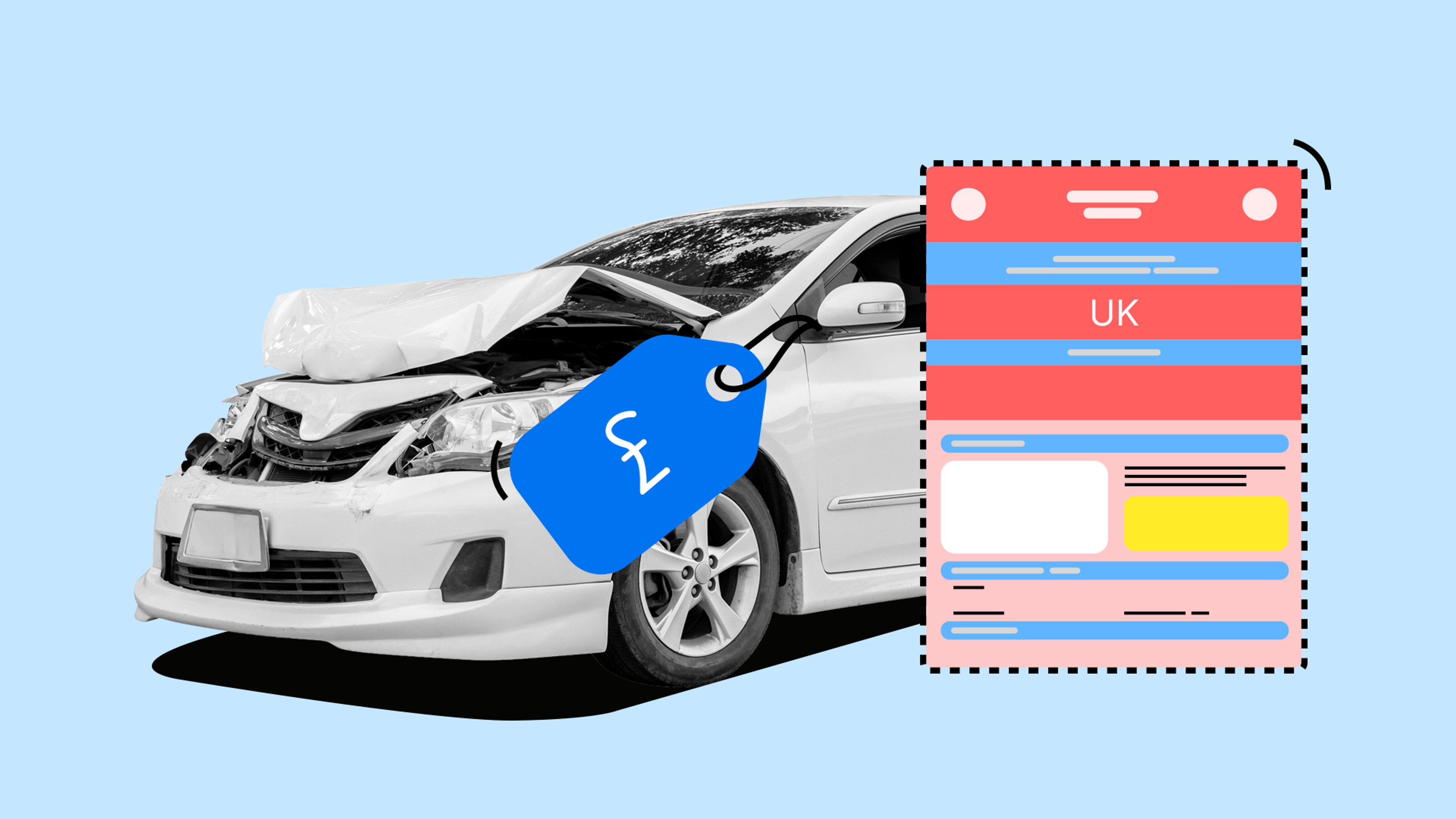
Sometimes a car feels like a financial burden. It could start with a scrape in the car park, a mechanical fault, or an insurer's letter with the words "total loss". Thousands of vehicles are written off in the UK every year, so if you’re asking how to sell my damaged car in the UK, you are not the only one.
I know how bad car damage can be, and how much repairs cost. Here, I’ll share what actually counts as damage, whether selling makes more sense than repairing or scrapping, where to sell, how to handle a private sale safely, and what the law says you must tell the buyer.
Check your car's history before selling
Find out what has been recorded about your car before you decide how to sell it.
What counts as a "damaged" car in the UK?
There are different levels to how damaged a car actually is. There are surface-level issues like scratches, dents, or curbed alloys. More serious issues can include mechanical faults (clutch issues, a non-running engine), electrical problems, or water or fire damage. At the most severe levels, you’d be facing structural damage to the chassis, subframe, or crumple zones.
Once an insurer gets involved, you can start to draw boundaries more easily. If they decide the car is too expensive or unsafe to repair, they'll give it a write-off category. Categories A and B are the most serious, and the insurance company will dispose of these directly to an authorized treatment facility (ATF) with no option for the owner to retain the damaged vehicle. Cat S and Cat N (replacing older Cat C and Cat D in 2017) cover damage which could be repairable.
Either way, the given category stays with the car forever on the insurers' central register, and can be found whenever someone runs a report to check for an insurance write-off. The UK works a bit differently from the US, so if you have heard of a "salvage title" from imports or on TV, the equivalent here is the ABI category on the register, although Cat S is also marked in the V5C.
The four write-off categories look like this:
Category | Meaning | Can it be sold or driven again? |
Cat A | This is the most severe. The entire vehicle must be crushed and no parts salvaged. | No. Scrap only, and it must be destroyed at an Authorised Treatment Facility (ATF). |
Cat B | The body shell must be crushed, but mechanical and electrical parts can be removed and reused. | Cannot return to the road. Sold for parts only before the shell goes to an ATF. |
Cat S | Structural but repairable damage (chassis, crumple zones, subframe). | Yes, if professionally repaired and re-registered with DVLA. |
Cat N | Non-structural but repairable damage (cosmetic, electrical, sometimes brakes or suspension). | Yes, if repaired safely. The V5C is not marked, but Cat N shows on history checks. |
Take note from above that a Cat S marker will appear on your V5C once the car is re-registered, but a Cat N marker is never recorded in the logbook at all. That means a buyer can only spot Cat N through a history check.
Is it worth selling a damaged car?
In most cases it is worth selling, but it depends on the situation. Sometimes the better move is to repair and keep it, but selling or even scrapping it can also be the best option. You can work out which is best by calculating costs first.
Insurers generally rule that if the cost to repair a car (including recovery, courtesy car, and so on) is more than 50 to 70 percent of what it was worth before an accident, they write it off as a total loss. That value can vary by insurer, but is a useful starting figure to help you begin making a decision.
When doing your maths, remember that modern cars push repair costs up rapidly. A windscreen replacement on a car with driver assistance systems now costs between £400 and £800 once the ADAS recalibration is added, and could be up to £1,200 on a more premium saloon. If you drive an EV, the battery can make up to 40 per cent of the car's total value, meaning even a small collision can write off a relatively new car.
A well-repaired category car still loses value, too. Cat N cars typically sell for 20 to 25 per cent less than those with a clean history, and Cat S cars for 30 to 50 per cent less, depending on model and repair quality.
Another important factor is even if a car is fully repaired, damage from previous accidents often can be found in carVertical history reports. Take a look at the example above: the severely damaged Audi Q5 looks pristine a few months later, but the record stays in a history report to remind about the vehicle’s past.
A rough outline for making a decision could be:
- Repair and sell privately if repair costs are well below both the car's value and the category discount.
- Sell as-is to an instant or specialist buyer if repair costs are near the total-loss threshold.
Actually, we just bought a Ford Focus RS that looks stunning at first glance, but hides shoddy structural repairs beneath the body panels. At this point, the car would be very dangerous in an accident, so repairs like this do more harm than damage. Take a look at the video below.
Where's the best place to sell a damaged car?
"Best" means different things to different people, whether it’s the highest price, the fastest sale, or the least hassle. There are a number of ways to get the result you want, and each route has its own advantages and disadvantages.
Online instant buyers like webuyanycar accept accident-damaged, non-running, and any write-off category. The catch is that they do not collect, so if the car is undriveable, you will need to sort out a trailer to get it on site. Online quotes are only guaranteed if the condition you’ve stated is accurate, so if you have missed something, the valuation may drop. Payment arrives in about four business days, or within fifteen minutes for a fee.
Specialist vehicle repairers like Salvage Rebuild UK repair crash damaged vehicles using recycled parts and sell fully repaired vehicles at well below market value.
Specialist damaged and scrap buyers such as CarTakeBack advertise buying "any car in any condition", and they usually include free collection. Their pricing is based on scrap metal weight plus any reusable parts.
Private sale is my preferred option for damaged cars because they're in better condition, have all the paperwork, and there are no auction fees. Auto Trader, eBay Motors, Gumtree, or Facebook Marketplace are usually where you'll get the most money, especially for a repaired Cat S or Cat N car. Bear in mind selling privately takes the most time, involves the most work, and puts the safety of test drives and payment on you.
Part-exchange with a dealer is convenient if you are buying your next car from them, but note that dealers discount damaged and category cars heavily. Part of that is to cover their resale risk, as a faulty car sold by a dealership puts them on the hook for far more than a private seller would be under the Consumer Rights Act 2015.
Salvage auctions like Copart UK or SYNETIQ mainly sell insurer stock, so the opportunities for a private seller to place a car with them are limited.
Ins and outs when selling a damaged car privately
If you decide to go private, being honest about the car’s condition is a legal requirement. Section 75 makes it an offence for anyone (dealer or private seller) to supply a vehicle in an unroadworthy condition. There is a defence if you had reasonable cause to believe it would not be used on the road until repaired, or was intended for export, so get it down in writing that the car is sold for repair, parts or export if that is your situation.
On top of that, the Misrepresentation Act 1967 means you cannot deny or downplay a known write-off, major damage, mileage discrepancy, or outstanding finance if the buyer asks. “Sold as seen” note won’t protect you in court so honesty remains crucial.
Pricing a damaged car takes a little more work than a clean one. Begin by searching for any live listings of similar Cat S or Cat N cars. You could also get a baseline price from Auto Trader, Parkers, or a VIN-based tool, and adjust down for the category discount. Always take clear, well-lit photos of every panel, and include close-ups of any damage. Buyers for these types of cars are experienced, and they tend to know what a fair price looks like.
Remember that if a private buyer feels they have been misled, they can take action, which typically ends up in small claims court. Being upfront about a car’s condition protects you from all of that, and tends to attract exactly the buyer you want.
Check your car's full history before you list it
See if it is already flagged as a write-off or has undisclosed damage. Enter your reg or VIN.
How to sell my damaged car: step by step guide
Once you have decided to sell, the process itself is fairly linear.
1.Verify the car's condition and history. Note down the damage openly and run a history check to confirm any write-off status, damage records, mileage, previous keepers, and outstanding finance. MOT history is free at gov.uk.
2.Get a valuation and multiple quotes. Use a free tool to check a used car's value by VIN, and get quotes from at least two instant buyers and one specialist. If you are going private, compare against live listings for similar category cars.
3.Put the paperwork in order. Collect the V5C logbook, photo ID, service history, MOT certificates, any repair invoices, the insurer's write-off or settlement letter if needed, spare keys, and the owner's manual. If you lost the V5C, apply for a replacement using form V62 first, or expect buyers to negotiate down.
4.Choose your route. Instant buyer for speed, specialist for a non-runner with collection, private for the best price, or ATF for scrap. To understand the process better, our guide on how to sell a car covers the trade-offs in more depth.
5.List honestly (private only). Describe the damage plainly, including the write-off category, photos of every panel, and set your price accordingly. Don’t be vague, and never state "full service history" if you don’t have it.
6.Agree on payment. Use bank transfer and confirm cleared funds in your account before handing over the keys. Fake bank screenshots are an increasingly common scam, so wait for the money to actually appear.
7.Complete the DVLA transfer. For a private sale, it’s important to transfer car ownership properly. Fill in the new keeper section of the V5C, give the buyer the green V5C/2 slip, and notify DVLA online with the 11-digit reference. If selling to a trader, insurer, or scrapyard, use the yellow "sell to the motor trade" section instead. Failing to tell DVLA costs a £1,000 fine, so it is worth getting the transfer exactly right.
8.Arrange handover. For a non-runner, arrange trailer collection rather than trying to drive an unroadworthy car, which risks a £2,500 fine and 3 penalty points per defect. Road tax is refunded automatically for any full remaining months, and you will need to cancel your insurance separately.
Find out what your car is really worth
Check your car's history before deciding whether to repair, sell, or scrap it.
Frequently asked questions
Article by
Salvage Rebuilds UK
Rob and Chris are automotive rebuild specialists and the creators of the Salvage Rebuilds UK YouTube channel, where they repair and restore accident-damaged vehicles. Drawing on hands-on experience with salvage and crash-damaged cars, they help readers better understand repair quality, rebuild costs, hidden damage, and the risks involved in buying rebuilt vehicles.