
24/05/2026
What is a Cat S Car? UK write-off categories explained

Renata Liubertaitė
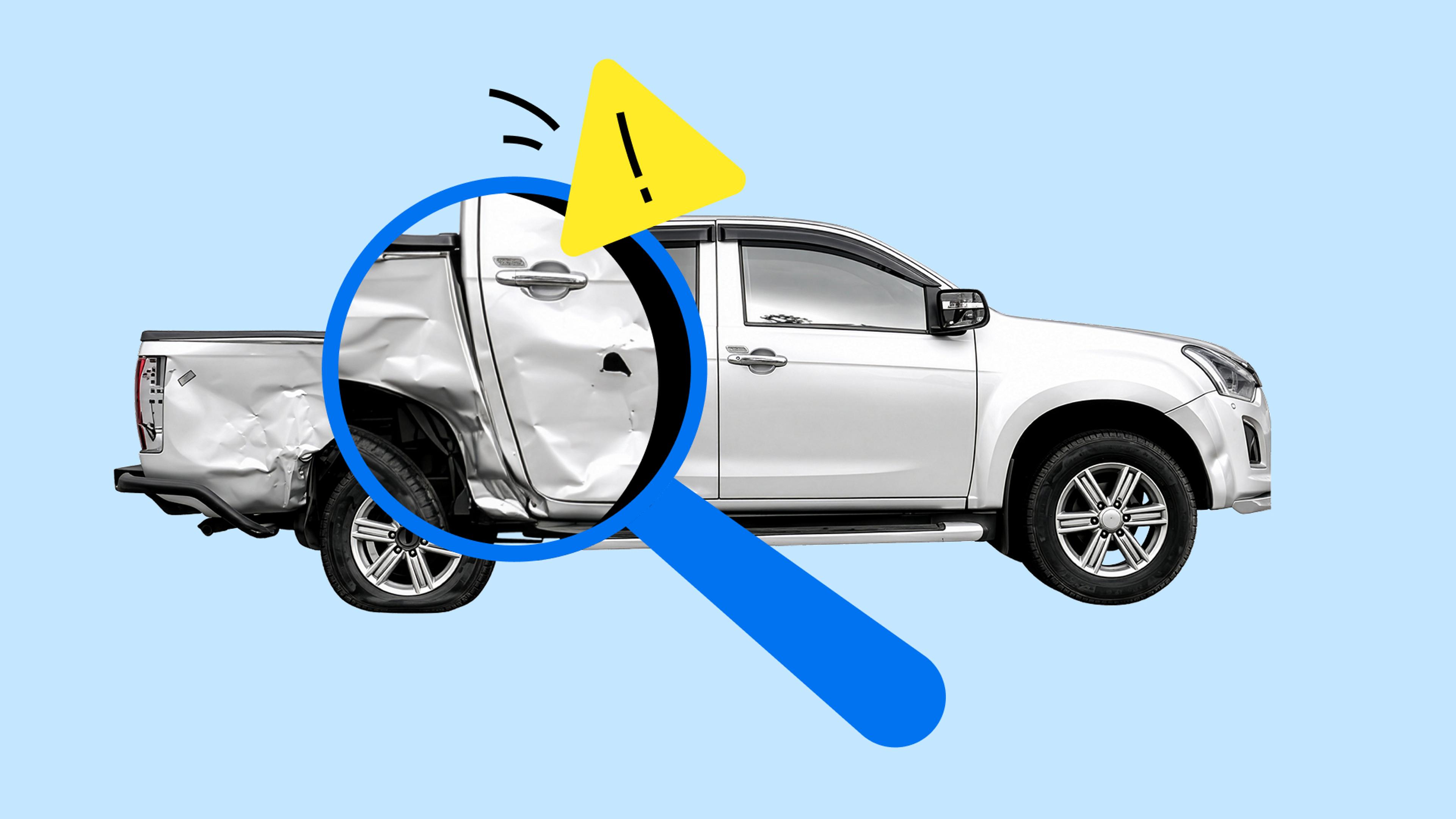
You’re scrolling through used car listings, spot a great deal, and then you see it: "Cat S car." Instinctively, you start wondering whether you might be onto a bargain, or if it’d just be simpler to walk away. Understanding the Cat S car meaning is a crucial step before making a decision to hand over any cash.
While the label might sound intimidating, these Cat S cars can sometimes be worth buying if you know exactly what to look for. Let's examine exactly what a Cat S car's risk profile is, and how to protect yourself from trouble further down the line.
Looks can be deceiving
A car may look fine on the surface but hide a history of serious damage. Check it with carVertical.
What is a Cat S car?
A Cat S car (Category S) is a vehicle that has sustained serious damage to its structural frame or chassis but is still classified as repairable by an insurer. The "S" officially stands for "Structural."
When people ask What does Cat S mean on a car, the answer is any damage involving bent chassis legs, crushed crumple zones, twisted inner wing supports, or damaged A and B pillars that are there to protect the cabin.
Insurers write these cars off because the cost of repairing them with OEM parts and dealership labour rates works out to be more than the vehicle's market value. However, it’s purely from a financial perspective, and doesn’t necessarily mean the car is permanently unsafe. While a car might be a total loss on paper, a specialist mechanic might still be able to fix it up.
In fact, once properly repaired and re-registered with the DVLA, a Category S vehicle can safely return to the road.
💡Note
Category S officially replaced the old Category C (Cat C car) classification in October 2017. The older system relied on financial repair-to-value ratios, while the newer system focuses on passenger and structural safety.
How UK car write-off categories work
In the UK, when a car is involved in a severe accident, an Appropriately Qualified Person (AQP) examines it to check for structural damage. If the insurance company calculates that repairing the vehicle isn’t worth it financially or judges the car to be structurally unsafe, they issue a total loss payout to the owner. The insurer then takes legal ownership of the asset and declares it a write-off.
However, this "write-off" doesn't always mean the car is headed straight to the scrap heap. The UK salvage system has four primary categories (A, B, S, and N), indicating whether the vehicle must be destroyed or if it can be legally salvaged, repaired, and driven again.
What are the different write-off insurance categories?
These are the four categories used in the UK to classify damaged vehicles.
Write-off category | Official designation | Mechanical definition and legal outcome | Vehicle reusability |
Category A (Cat A car) | Scrap/Recycle | These vehicles are entirely unsuitable for repair – must be completely crushed. | No parts to be salvaged. The structural framework (VIN) must be destroyed. |
Category B (Cat B car) | Break | Catastrophic damage – primary structural frame declared permanently beyond safe repair. | Main body shell crushed, but safe, non-structural parts may be salvaged. |
Category S (Cat S car, former Cat C) | Repairable structural | Significant damage to any part of its structural frame or load-bearing chassis. | Can be repaired and returned to the road following DVLA re-registration. |
Category N (Cat N car, former Cat D) | Repairable non-structural | No structural damage, but it may have extensive cosmetic, electrical, or mechanical issues. | Can be repaired and returned to the road with fewer hurdles. |
Note that Cat C car and Cat D car categories were the older classifications, replaced in October 2017, but you may still see these codes when you want to check if a car is a write-off, particularly when looking at the histories of older used vehicles.
Cat S vs Cat N: what's the difference?
The key difference when comparing Cat N vs Cat S cars comes down to the vehicle's core safety cell – the part of the car which surrounds and protects the passengers. Category S means there has been structural damage to this cell, such as a bent chassis or crushed pillars, which would require specialised repairs to restore the car back to its factory specs.
On the other hand, Category N means the vehicle avoided any structural issues during its accident. Instead, the damage is limited to the outer components of the car, such as destroyed headlights, smashed cosmetic bumpers, or faulty interior electronics. Because the core safety cell remains completely intact, Category N vehicles offer much lower safety risks, and they usually involve less difficult repairs.
What happens to a Cat S car after it’s written off?
When a car is officially declared a Category S write-off, the insurer updates the Motor Insurance Anti-Fraud and Theft Register (MIAFTR) and then surrenders the V5C logbook to the DVLA, creating an admin block on the car. The vehicle is then usually sent off to a salvage auction (like Copart or BCA), where mechanics can buy it to repair and resell.
Once repaired, the car is immobilised until the new owner applies for a replacement V5C (using a V62 form). A new logbook is then issued, which states that the car was salvaged.
It’s important to note here that there’s no special safety certification required for Cat S cars beyond the standard requirements today. While the car does need a valid MOT, the UK dropped the Vehicle Identity Check (VIC) in October 2015, meaning a specific structural inspection is no longer required to return the vehicle to the road.
Should you buy a Cat S car?
Buying a Cat S car can be a shrewd investment, mainly because you can get a much lower purchase price than the market rate. If the vehicle has been repaired to a high standard, it can serve you well, offering excellent value for money. You still have consumer rights if you're buying a faulty car from a dealer in the UK, and its category could give you leverage in how to negotiate on a used car.
Ultimately, when deliberating “Should I buy a Cat S car?”, it’s important to balance the potential upfront savings against the risks carefully before making a decision. There could be hidden structural weaknesses, and future resale friction means it isn't a process to be rushed.
💡Pro Tip
Before buying a Cat S car, always: get an independent inspection, check the vehicle history report, and verify the repair was done to manufacturer standards.
What are the risks of buying a Cat S car?
When buying a Cat S car, you need to be aware of some serious potential pitfalls:
- Safety compromises: Unverified structural repairs could lead to a catastrophic failure in a secondary collision, which could put you and your passengers’ safety at risk.
- Finance difficulties: Traditional finance, like Personal Contract Purchase (PCP), is essentially impossible due to unpredictable Guaranteed Minimum Future Value (GMFV). Hire Purchase (HP) is also high-risk and difficult to secure.
- Insurance costs: It is harder to find a willing insurer, and premiums are generally much higher. Without thorough inspections from the AA or RAC or an absence of repair documentation, the impact can be significant.
Does a Cat S car affect value and resale?
Yes, a Category S marker severely impacts the vehicle's residual value. A Cat S car is typically priced 20% to 40% cheaper than a non-damaged equivalent.
Notably, when it comes time to resell the vehicle, you will be looking at a much smaller number of buyers. Private buyers are often heavily sceptical of structural write-offs, and commercial buyers (like WeBuyAnyCar) offer much less for salvage vehicles. The biggest differences affecting resale value will always be the quality of the repair and the documentation you can provide.
Cat S car insurance: what you need to know
Insuring a Cat S car is definitely possible, but at higher premiums, and with fewer providers willing to take on the contract. It’s less about can you insure a Cat S car, and more about affordability. Most mainstream insurers use filtering to outright reject structural write-offs, meaning you may need to explore specialist brokers like Adrian Flux or Brentacre.
If you do find a Cat S car insurance provider, be prepared for premiums inflated by 15% to 50%. Don’t be tempted to try to hide the Category S status from your underwriter, either, as it invalidates the policy. They can decline claims, and it could trigger a fraud investigation.
How to check if a car is Cat S before buying?
A car’s structural past isn’t always obvious from how it appears on the surface. Fresh paint, new panels, and professional detailing can easily hide underseal, poor welds, or twisted chassis rails.
Using a carVertical VIN or REG check is one of the easiest and most reliable ways to verify a car’s true history. Checking official records helps you uncover critical details that private sellers or dealerships might not want you to know about.
Depending on data availability, a carVertical report can reveal:
- Damage history and the exact write-off category.
- Estimated repair costs based on official OEM parts and dealership labour rates.
- Damage groups and the specific sides of the vehicle affected.
- Photographic evidence from historical auction listings lets you see exactly how badly the car was damaged before cosmetic repairs.
Remember that structural damage and poor repair quality aren’t always evident, even during a test drive. It is simple to check accident history, and the effort can prevent costly and dangerous surprises down the line. You can easily look up a car's history on carVertical by entering its REG or VIN into the banner below. To better understand what information is included, you can also review a sample vehicle history report.
A smart car purchase starts with a history check
Enter the car's REG to check write-off records, mileage, ownership history, and more.
Frequently asked questions
Article by
Renata Liubertaitė
Renata is a content writer at carVertical who specialises in vehicle history reports and their practical use. With several years of experience analysing car histories and product data daily, she helps readers recognise red flags in the used car market and avoid common pitfalls when choosing their next ride.