
06/03/2026
Junkyard reports #6: from a crash in the US to the German autobahn – the extreme makeover of a Porsche 911

Karolis Bareckas
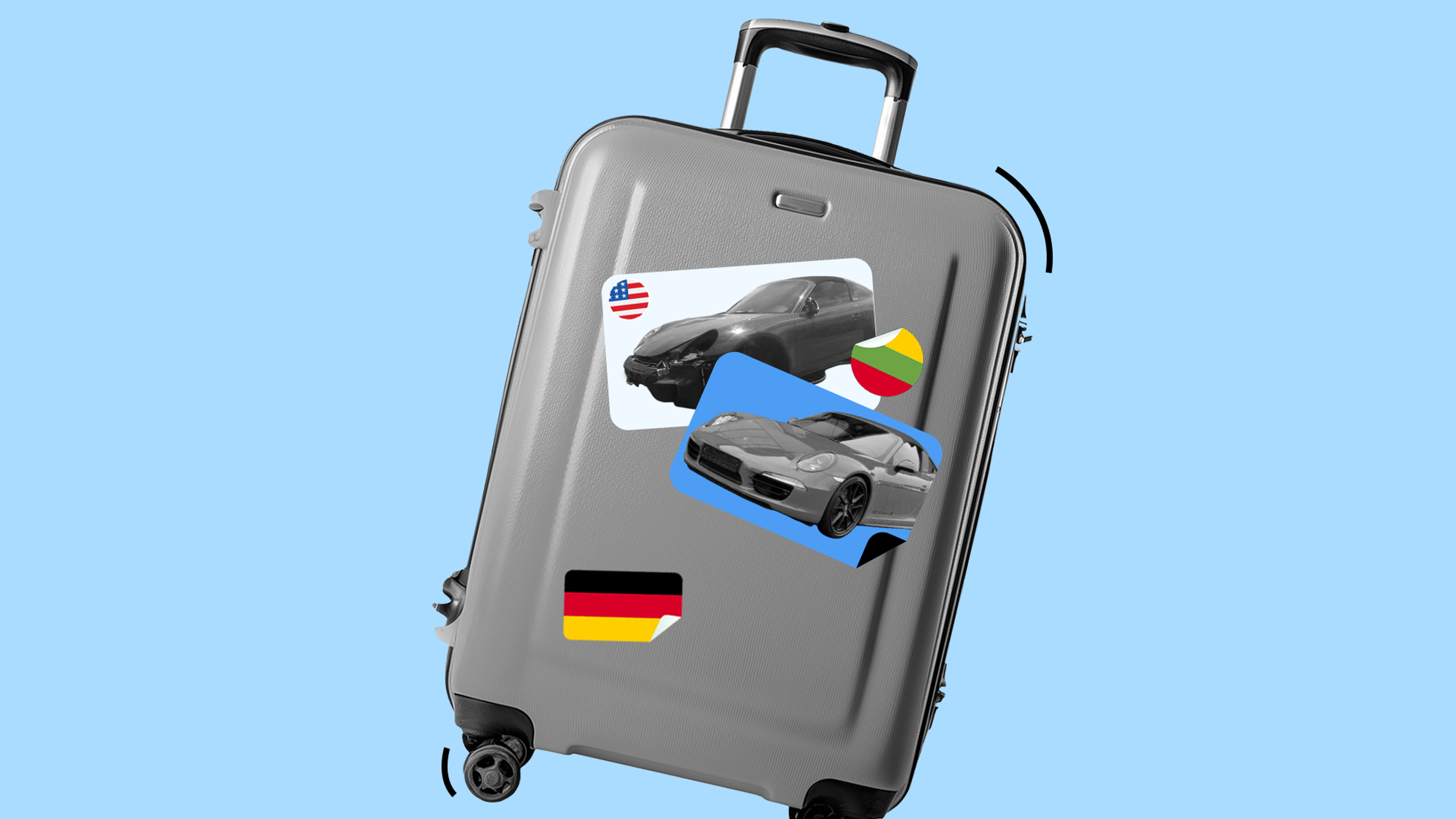
Germany is Europe’s biggest car exporter, supplying the continent with second-hand vehicles like a well-oiled machine. But cars don’t just flow out of Germany – plenty flow in, too. And imported cars have a habit of bringing secrets along for the ride.
Today’s story follows one particularly well-travelled Porsche 911. It started life in the United States, suffered a serious accident, crossed the Atlantic to Lithuania, and eventually resurfaced in Germany – conveniently looking brand new along the way.
As always, the past has a way of catching up.
A short dossier
Suspect: Porsche 911
Model year: 2016
Recorded damages: 1
Countries changed: 3
Current country of residence: Germany
What happened?
Our Porsche 911 was first registered in the United States. After just 2 years on the road, however, its carefree cruising came to an abrupt end – the car was involved in an accident.
Photos in the vehicle history report show significant front-end damage, along with noticeable damage at the rear. This wasn’t a light parking mishap – it was a serious collision, not something you’d fix with polish and optimism.
At the front, the bumper, hood, left headlight, and front-left fender were either heavily damaged or missing altogether. The front-left wheel and suspension area also appear compromised – the car is resting on a stand – suggesting potential suspension or even structural damage.
The rear didn’t escape unscathed either. The rear quarter panel and bumper show clear deformation and scraping, likely caused by a secondary impact or being pushed into another object. While the rear damage appears less severe than the front, it still points to body panel replacement and repainting.
According to carVertical records, the Porsche received a Salvage title. This usually means the vehicle was considered uneconomical to repair in its original market. But a salvage title doesn’t mean the end of the road – far from it.
In many cases, it simply means the car is about to start a new life… somewhere else.
A mysterious trip to Lithuania
After the crash, the Porsche was sold at auction. Just 2 months later, it underwent a condition assessment in Lithuania. Then comes the quiet part. From August 2018 to June 2019, there are no records related to this 911. No mileage updates. No registrations. No inspections.
10 months – more than enough time for a full transformation.
When historical photos reappear, the Porsche looks immaculate. No visible scars. No obvious signs of its turbulent past. Ready to find a new owner.
The most interesting detail? The car wasn’t sold in Lithuania. Instead, it surfaced in Germany.
That usually means one thing: the car was repaired, refreshed, and then exported to a market with stronger demand and higher prices for sporty premium models.
Eastern European countries tend to import a high share of used cars. In Lithuania, for example, 76.7% of all vehicles checked on carVertical were imported from abroad. Some of those cars don’t stay there for long – they continue their journey west.
Should you buy a car with a damage history?
We don’t know whether the buyer in Germany was informed that this Porsche had been imported from the US, heavily damaged, and repaired abroad. We also don’t know how thoroughly the repairs were carried out.
What we do know is this: buying damaged cars at US auctions, repairing them, and selling them in Europe is a long-established business model. Buy cheap. Fix fast. Sell smart.
The question is how those repairs are done. To maximise profit, some sellers may use cheaper, non-original parts or overlook mechanical components that are expensive to fix properly.
Some buyers are perfectly fine with a car that’s had an accident – especially if the repairs were done well and documented. Others avoid such cars entirely, unsettled by the uncertainty and the fear that not everything has been disclosed.
How to read carVertical reports to spot imported damaged cars
If you want to avoid unpleasant surprises, a vehicle history report can tell you far more than a glossy listing ever will. Pay close attention to:
- Photos. They often reveal the true extent of past damage and show which parts were hit the hardest.
- Salvage or junk titles. A major red flag that requires context. Dig deeper to understand whether the car was properly repaired – and whether it’s truly safe to drive.
- Damage records. The damage section can show when and how the car was damaged, along with the approximate repair value. This helps you assess how serious the incident really was.
- Mileage gaps or inactivity periods. Long periods without records may indicate extensive repairs or that the car was sitting in a lot or garage waiting for its second chance.
- Timeline and country changes. Multiple border crossings and ownership changes deserve extra scrutiny. Cross-border transactions are often where parts of a car’s history can disappear.
Even if a car looks perfect and the report looks clean, get it inspected at a service centre. A professional check is the last line of defence between you and an expensive regret.
Check your VIN
Avoid costly problems by checking a vehicle's history. Get a report instantly!
Article by
Karolis Bareckas
Karolis is an automotive writer and researcher at carVertical, where he works closely with the data team to deliver evidence-based insights into the used car market. For over 5 years, Karolis has been diving into the numbers to help car owners better understand the importance of vehicle history, used car buying risks, and automotive trends.