
20/02/2026
Looking for a greener ride? Best second-hand hybrid cars in NZ

Renata Liubertaitė
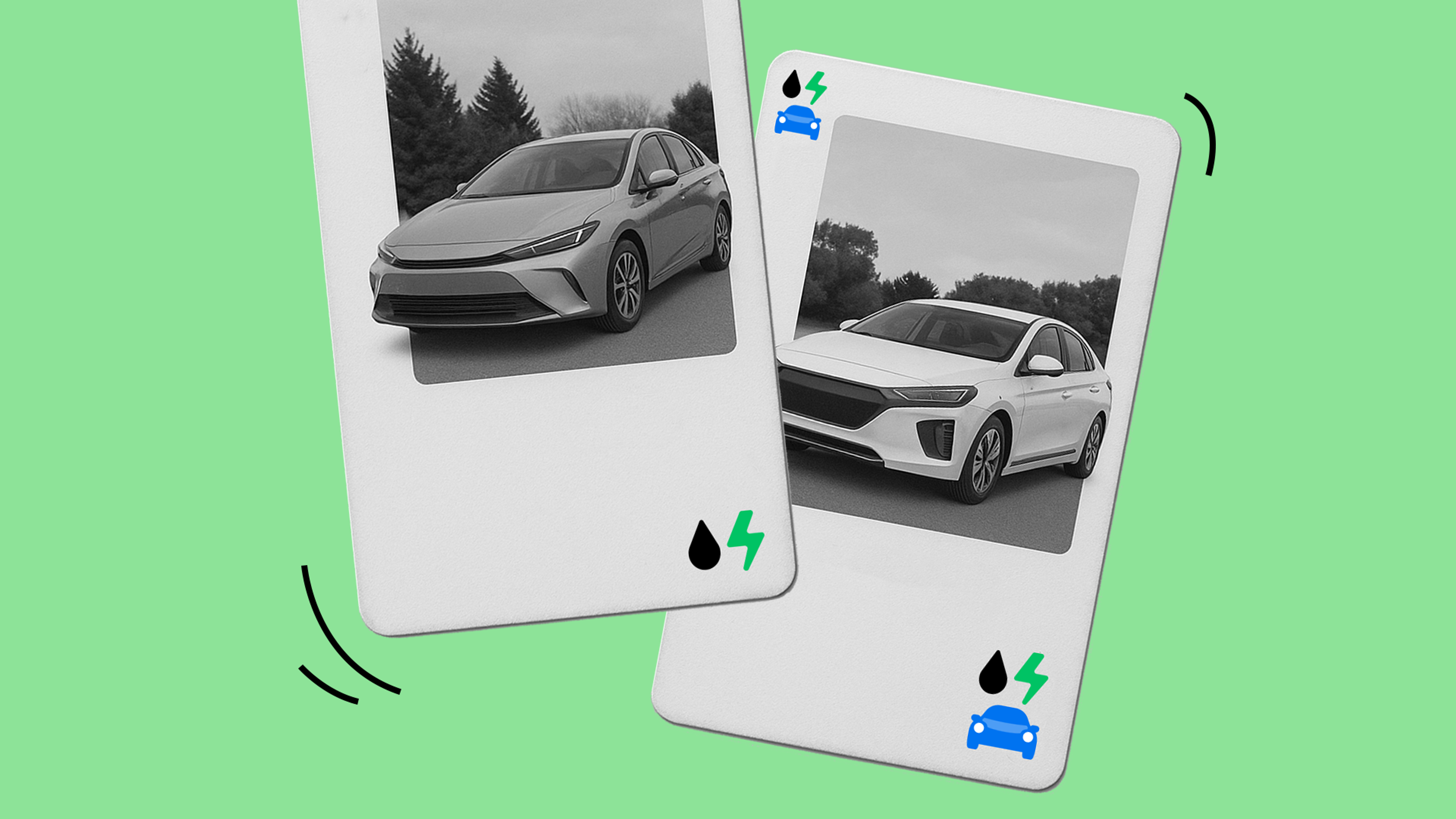
It’s no secret that Kiwis love a good road trip, but with petrol prices hovering around the $2.50 mark and the "clean, green" image of Aotearoa constantly in the back of our minds, many drivers are looking for smarter ways to get from A to B. While the government's Clean Car Discount has wrapped up, the appetite for hybrids hasn't slowed down. In fact, electrified vehicles now make up nearly half of the new car market here.
Buying brand new can still be a wallet-stretcher, though, which is precisely where the used market comes into play. Japanese imports are easy to come by, and New Zealand has a wide range of second-hand hybrids. But buying used comes with its questions: How much does the battery have left? What about Road User Charges (RUC)? And which models can actually handle our rugged roads?
In this article, we’ve put together a list of the best second-hand hybrid cars in NZ you can buy today. Read on to explore everything you need to know about them, including potential pitfalls, before you hand over any of your hard-earned money.
What is a hybrid car?
A hybrid vehicle uses both a standard combustion engine (usually petrol), which is supported by an electric motor (using a battery pack). The idea is to reduce how much fuel is used and cut emissions, without the range anxiety you can often get with fully electric vehicles.
Unlike a pure EV, which definitely needs to be plugged in to charge, a hybrid uses its petrol engine and regenerative braking (which captures energy when you apply brakes) to keep the battery topped up. You can drive a hybrid anywhere you’d drive a standard car, from the daily Auckland commute to a tiki tour of the South Island, without worrying about charging stations.
Types of hybrid systems in cars
Before taking a look at what’s on offer in Trade Me, it helps to know that not all hybrids are created equal. There are different types for different lifestyles. The three main systems you'll see on our roads are:
Mild hybrids (MHEV)
These are lightweight hybrids. They contain an extra electric battery to help the engine with tasks like starting, stopping, and powering the air con, but they cannot drive the car on electric power alone. MHEVs are usually cheaper upfront, but don’t bring much in the way of fuel savings.
Full hybrids (HEV)
HEVs have the ability to self-charge and have become the most popular choice in NZ (Toyota Prius or Camry are HEVs). You can drive short distances using just electric power alone, usually within 2km range at low speeds. The engine and brakes charge the battery, so they don't need to be plugged in. Just now, they are the most affordable and easiest entry into hybrids.
Plug-in hybrids (PHEV)
These are the interim between standard hybrids and full EVs. With larger batteries that can be charged from the wall, you can drive them using electric only for much longer (usually between 30km and 80km / depending on model). For shorter commutes, you might drive weeks without using a drop of petrol.
Quick comparison: Hybrid types
Feature | Mild Hybrid (MHEV) | Full Hybrid (HEV) | Plug-in Hybrid (PHEV) |
Electric-only driving | No | Yes (Short distances, <2 km) | Yes (30–60+ km) |
Battery size | Small (0.1–1 kWh) | Medium (1–2 kWh) | Large (8–18+ kWh) |
Charging | No external charging | Self-charging (no plug) | Requires external plug-in |
RUC in NZ | Exempt | Exempt | Applies ($53/1000km) |
Cost | Lowest upfront | Moderate | Highest upfront |
Best for | Slight efficiency boost | Mixed driving, no hassle | City commutes + long trips |
Best used hybrid cars to buy in New Zealand this year
If you are looking for reliability and value, there are some heavy hitters vying for top spot on the best second-hand hybrid in NZ rankings today. Thanks to our strong import industry, Japanese classics like the Toyota Aqua and Prius are available in huge numbers, making parts easy to find and prices competitive.
Toyota Aqua
The Toyota Aqua is practically the unofficial car of New Zealand at this point. As the country's most popular used import, it is incredibly fuel-efficient, sipping just 3.6–4.0L/100km. You can pick up a tidy 2011–2013 model for around $7,000–$11,000. It’s compact, zippy in the city, and parts are everywhere.
Toyota Prius
The Prius basically started the hybrid movement and offers some of the best reliability even today. It has a larger interior than the Aqua and is a huge favourite for both Uber drivers and families. Expect to shell out between $9,000 and $18,000 for a decent 3rd-gen model (2009–2015). Its hybrid system is legendary for lasting over 200,000km with basic maintenance.
Toyota Corolla Hybrid
Want something that looks and feels like a "normal" car? The Corolla Hybrid is it. It’s on the market as both hatch or wagon (check: the Fielder), and does a great job at combining practicality with hybrid efficiency (around 4.2L/100km). Prices are usually between $16,000 and $25,000 for used imports. It’s incredibly reliable and holds its value well.
Best used hybrid SUVs in NZ
Kiwis love SUVs for their interior space, towing power, and ground clearance, which come in handy on gravel driveways and weekend adventures. Hybrid SUVs offer utility while reducing the fuel bill at the end of the day.
Mitsubishi Outlander PHEV
NZ's best-selling plug-in hybrid – for good reason, as it has genuine 4WD with enough space for a whole family. Older models (2013–2016) are out there at under $15,000, but keep an eye on battery degradation in early models, as it heavily reduces EV range. Find a good one, though, and you’ve got a car which can handle the school run on electric power alone.
Toyota RAV4 Hybrid
Topping new car charts for years, the RAV4 Hybrid continues its runaway success even today. Used examples (2019+) hold value well and can often fetch between $30,000 and $40,000. As well as being spacious, it’s powerful - with the E-Four AWD system giving excellent traction on both boat ramps and ski fields. Top-tier reliability proves it a safe bet for long-term ownership.
Hyundai Kona Hybrid
As a compact SUV that includes modern styling, the Kona definitely earns a place among the best used hybrid SUVs in NZ currently. It’s reasonable, with a 2019–2021 model setting you back around $29,000. The Kona has a range of impressive tech and safety features, and unlike the CVT transmissions in Toyotas, the Kona uses a dual-clutch gearbox for driving that’s a bit sportier. It's efficient too, with official figures rivalling models like the Toyota Yaris.
Best small hybrid cars for city driving
For those of us living around Auckland, Wellington, or Christchurch, it could be argued that a small hybrid car is a perfect match. The large amount of stop-start traffic here is where electric driving shines, and a smaller footprint makes parking easy.
Toyota Yaris Hybrid
The Yaris is incredibly efficient, offering official consumption as low as 3.0L for 100km driven. Being built on a modern platform, it has excellent safety features, too. You can expect to pay from around $15,500 for a 2020 model, making it possibly the most frugal non-plug-in car you can buy today.
Toyota Prius C
Ideally, "Prius C" refers to the NZ-new version of the Aqua. Although it was discontinued in 2020, used models (2012–2019) are still solid buys between $8,000 and $20,000, making them one of the cheapest hybrid cars in NZ. They hold their own over the Aqua imports by featuring an English-language dashboard, and a more easily traceable domestic service history from new.
Honda Jazz Hybrid (e:HEV)
The Honda Jazz is famous for its "Magic Seats", which offer incredible Tardis-like interior space. The newer e:HEV models (2020+) use a unique system where the petrol engine mostly acts as a generator for the electric motor, giving it a very smooth, EV-like feel. Prices for these newer models start around $25,000, although good used imports are gradually filtering into the market for much cheaper.
Nissan Note e-Power
Called a "series hybrid", the petrol engine never drives the wheels directly but only charges the battery. The result is the instant torque and one-pedal driving experience of an EV, without the need to plug in. It’s a brilliant city small hybrid car available as an import for $10,000–$15,000.
Advantages and disadvantages of hybrid cars
Many ask why they should buy a hybrid when petrol or electric is available, but it all comes down to finding the middle ground.
Advantages
- Fuel savings. You can slash your fuel bill by 30–50% compared to a petrol car. With 91 petrol often over $2.50/L, saving $1,500 a year is a realistic target for many drivers.
- No RUCs (for most). Standard hybrids (HEVs) like the Prius and Aqua are exempt from Road User Charges. You only pay petrol tax at the pump. It’s a massive advantage over diesel cars, EVs, and plug-in hybrids.
- Reliability. Electric motors can take pressure off the petrol engine. Regenerative braking also helps brake pads last longer, at up to 100,000km or more.
- Easy transition. You don’t need to install home chargers, or plan trips around charging stops. Just fill up and go.
Disadvantages
- Battery anxiety. Batteries don't last forever, and replacing a hybrid battery typically requires $1,600 to $4,000 (depends on model). Usually, batteries last 10 to 15 years.
- Complexity. You technically have two powertrains (petrol and electric) to maintain, although they are generally very robust.
- Road User Charges (PHEVs only). Plug-in hybrids (like the Outlander PHEV) do have to pay RUCs ($38/1000km currently effectively $53 with admin), which cuts into the savings if you don't charge it often.
- Future proofing. Hybrids are a stepping stone - the goal is to get everyone in EVs, but hybrids will remain a great option for at least the next decade.
Cost of owning a hybrid car in New Zealand
The sticker price is just the beginning. Here is what ownership looks like in the real world.
Running costs
A typical hybrid like the Aqua uses about 3.6–4.0L/100km. Compare that to a similar petrol hatchback using 7–8L/100km, and you are effectively halving your weekly fuel bill.
Maintenance
Hybrids are surprisingly cheap to maintain, at roughly 22% cheaper than petrol cars on average. You don't have a starter motor or alternator to fail, and the brakes wear incredibly slowly. However, you do need to budget for the big "what if": the high-voltage battery.
Road user charges
This is a critical distinction in NZ right now:
- Standard Hybrids (Prius, Aqua, RAV4 Hybrid): Pay $0 RUC.
- Plug-in Hybrids (Outlander PHEV, Prius Prime): Pay $53 per 1000km.
- EVs: Pay $76 per 1000km. Currently, standard hybrids sit in a "sweet spot" where they avoid RUCs entirely, making them arguably the cheapest vehicles to run in the country.
What to look for when buying a hybrid?
Checking over a hybrid is very similar to inspecting any used car. Check the tyres, look for rust, and ensure the service history is up to scratch. The key difference is the battery – which should be your main concern.
Hybrid performance depends entirely on the battery health. With a weak battery, the petrol engine is forced to work constantly, which eliminates any savings in fuel economy.
- Test drive. Listen for the cooling fan in the back seat. If it's constantly noisy, it could mean the battery might be overheating/struggling.
- Check the dash. Can you see any warning lights like the "Red Triangle of Death" or "Check Hybrid System"?
- Professional scan. Standard OBD2 scanners often can't read battery life accurately on Toyotas. It is highly recommended to get a pre-purchase inspection from a specialist like Hybrid Core or a specific AA hybrid check, which can test the voltage of individual battery cells.
Check any used hybrid car history with carVertical before buying
There is one specific risk with hybrid imports that physical inspections might miss: mileage fraud.
Because hybrids are often bought for their low running costs, mileage is a key factor in their value. A hybrid battery typically lasts up to 200,000km, so buying a car with low mileage is a priority for many. Unfortunately, this makes them targets for odometer tampering. Recent investigations found hundreds of imported vehicles in NZ had their odometers wound back, some by over 100,000km.
This is where a carVertical history report is essential. By entering the car's VIN, you can see its history before it arrived in New Zealand.
- Mileage verification: View recorded mileage readings over time. A sudden drop in the graph often indicates a rollback.
- Theft and damage: Ensure the car wasn't written off or stolen in another country before landing on a used car lot in Auckland.
Knowing the true history prevents you from buying a car that is far more worn out, and therefore closer to a battery failure, than it appears.
Check your VIN
Avoid costly problems by checking a vehicle's history. Get a report instantly!
Should you buy a used hybrid car?
For most Kiwi drivers, the answer is a resounding yes. If you are an urban commuter, a ride-share driver, or a family looking to cut costs without sacrificing weekend freedom, a used hybrid car is currently the most logical financial choice.
They offer a great balance between fuel economy, which is an increasing concern, with the convenience of getting into a car and simply driving without worrying about range. Just remember the different technology means it’s important to budget for a potential battery repair in the long term. Choose a model that avoids RUCs if you want maximum savings, and always verify the vehicle's history to ensure you aren't buying a lemon.
Frequently asked questions
Article by
Renata Liubertaitė
Renata is a content writer at carVertical who specialises in vehicle history reports and their practical use. With several years of experience analysing car histories and product data daily, she helps readers recognise red flags in the used car market and avoid common pitfalls when choosing their next ride.