
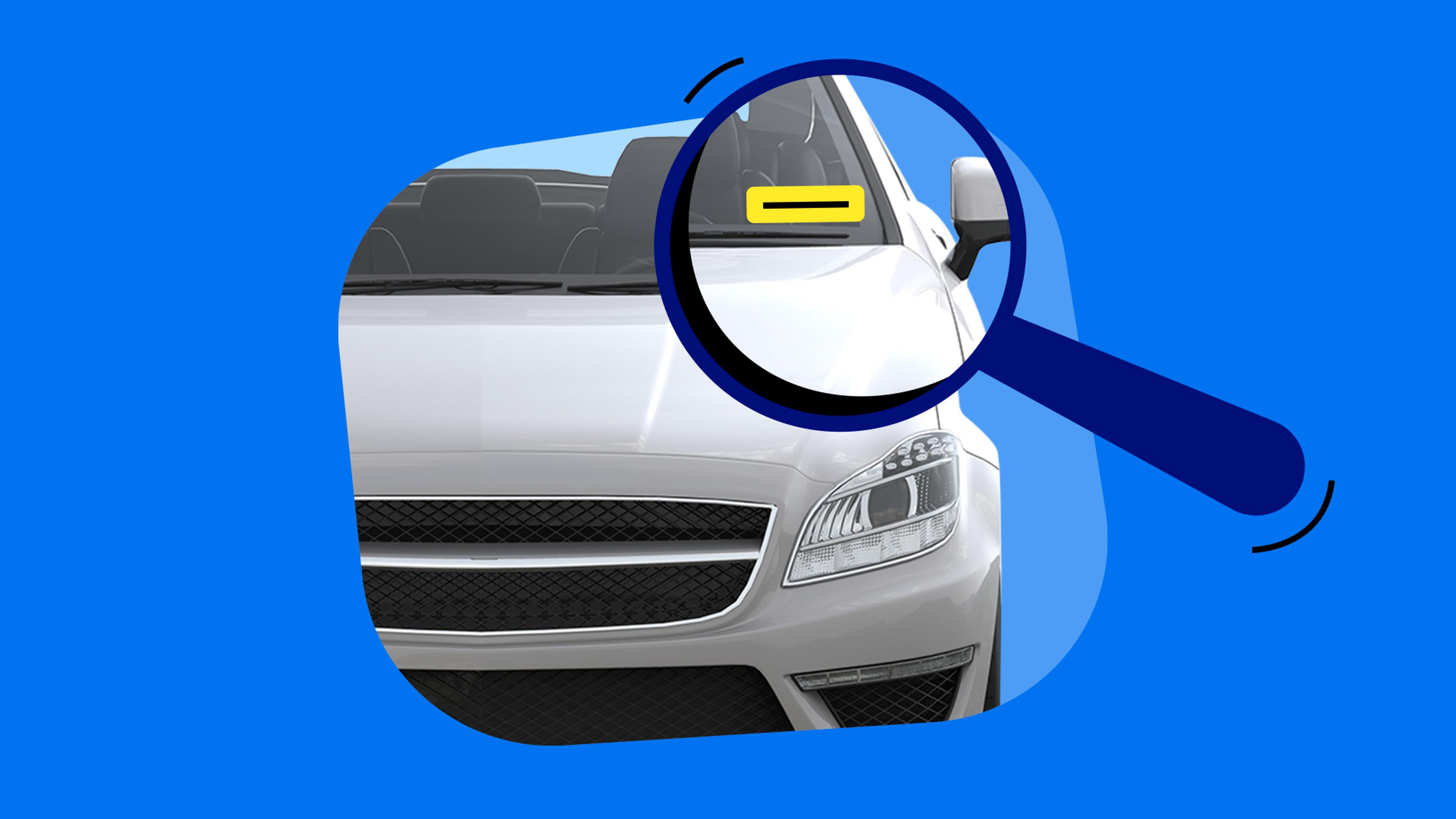
Every motor vehicle has a unique code for identification called a VIN (vehicle identification number). This code doesn’t change throughout a vehicle’s lifetime and allows us to identify it anywhere, anytime.
In this article, we’ll explain what a VIN number is and where you can find it.
Looking for a reliable car?
A well-maintained and undamaged car is the most reliable! Check any VIN code to make sure you're not buying a wreck:
Where can I find a VIN number on a car?
On a car, the VIN is typically located in several areas, but a few of the most common ones are:
- Bottom of the windshield – almost all modern cars have a VIN plate on the driver’s side of the dashboard, which is visible through the windshield from the outside.
- Under the hood – you may find a VIN plate under the hood, next to its latch.
- Front end of the frame – accessible via the wheel well; you’re more likely to find the VIN there on older cars.
- Driver’s side door pillar – some cars have a VIN plate on the inner side of a driver’s side door pillar.
- Next to a spare wheel – you may find a VIN number under the trunk lining, next to the spare wheel.
Locating the VIN number is especially important when buying a used car. Look for these plates in different locations and make sure the numbers match. If they don’t, consider it a huge red flag – you may even be looking at a stolen car!
Where can I find a VIN number on a motorcycle?
It’s not just cars that have VIN numbers – other motor vehicles, including motorcycles, scooters, ATVs, RVs, and other vehicle types, also have them.
Like with cars, manufacturers usually put the motorcycle VIN on irreplaceable parts, but the exact location may differ between makers and models. Typically, you will find the motorcycle VIN:
- Near the headstock (steering neck) – inspect the structure that holds the handlebar.
- On a frame rail – try the rail that holds the front wheel.
- On the bottom of the engine.
You may also check a motorcycle’s registration and insurance documents – these will usually also include the VIN. Make sure the numbers match.
How to lookup a VIN number
Various registries and institutions collect vehicle data, which is accessible using a VIN number. Some countries also have local databases (Statens vegvesen in Norway) for drivers to get a brief car history with the VIN or license plate number.
However, Statens vegvesen does not show details like accident history, odometer fraud, or theft records. For that, we recommend using carVertical, which gather international data from insurance and law enforcement sources.
By entering a car’s VIN into our decoder, you can find basic information such as the make, model, and technical specifications—similar to what you’d get from other free VIN check tools. However, you can also access a detailed vehicle history report, which reveals much more, including mileage records, past damages, and even historical photos.
Check our sample report to find out more about its benefits.
Check your VIN
Avoid costly problems by checking a vehicle's history. Get a report instantly!
Why is the VIN number so important?
A VIN number will be used whenever you want to register a car, file an insurance claim, change the title, or perform other similar actions. It’s an essential part of vehicle identification, so many legal changes and actions are recorded via this number.
A vehicle identification number also plays a big role when buying used vehicles. Any car or motorcycle on the road may have been battered or even stolen. Even though used vehicle sellers often claim their cars are accident-free, history reports often show otherwise. Driving a poorly repaired vehicle can be dangerous due to missing airbags or a compromised structure.
VIN tampering is relatively common on the market, as dishonest used car sellers look for ways to benefit. They often cut, weld, and fasten other VIN plates, even though most VIN plates are attached using rivets you won’t find in regular shops. That’s why ensuring all VINs match and don’t have tampering signs is essential.
How to read a VIN number
The first VIN numbers were used in the 1950s, but the format varied by manufacturer, making vehicles more challenging to identify.
The NHTSA (National Highway Traffic Safety Administration) standardized the current VIN format in 1981. As a result, almost every vehicle made after 1981 has a unique 17-character identification code that must be placed on each vehicle.
Every character in the vehicle identification number represents particular information about a vehicle. The whole number can be divided into 4 sections for easier navigation:
- VIN characters 1-3 (WMI): The world manufacturer identifier section contains 3 characters showing where a vehicle was built and its manufacturer.
- VIN characters 4-8 (VDS): The vehicle descriptor section reveals a vehicle’s brand, body style, and engine size.
- VIN character 9: This is a vehicle security code known as a check digit. It’s calculated by putting all the other VIN digits into a mathematical formula.
- VIN characters 10-17 (VIS): The vehicle identifier section contains 8 characters, 2 of which show the model year and an assembly plant code, while the last 6 numbers contain the serial code of a vehicle.
Each specification, assembly plant, manufacturer, and other properties have corresponding characters in a VIN number, so you have to decode a VIN to reveal its information. A simple VIN decoder can do that for you in a few seconds.
Note: Bear in mind that 17-character Vehicle Identification Numbers don’t have O(o), I(i), and Q(q) letters to avoid confusion with 0, 1, and 9.
How to spot a fake or tampered VIN
A legitimate VIN should always be consistent, clear, and match official records.
Here are key warning signs that a VIN might be fake or altered:
- Missing or altered characters
- Physical tampering signs (cratches, uneven paint, altered VIN plate)
- Unusual characters (includes I, O, or Q)
- VIN location mismatch (unusual or non-standard location)
- Check digit mismatch (doesn’t match the calculated value)
- Non-matching documents (VIN on the vehicle doesn’t match the one on its documents), etc.
Always verify the VIN before purchasing a used vehicle to avoid scams.
Frequently asked questions

Article by
Evaldas Zabitis
Evaldas is an automotive expert and writer at carVertical, focusing on technical automotive topics. With studies in motor transport electronics and over a decade of experience in car flipping and automotive writing, he helps readers better understand vehicle history, inspections, maintenance, and common used car buying risks.